
For years, the Kurdish and border regions of western Iran have stood at the intersection of overlapping crises: underdevelopment, economic hardship, border trade constraints, political-security conflicts, and the armed activities of non-state groups. Amid these intersecting pressures, the paramount concern must not be the victory of one political narrative over another, but the fate of the civilians living through these crises.
Any serious analysis of Kurdistan must simultaneously address two realities: on the one hand, economic distress, unemployment, limited job opportunities, unbalanced development, and the hazards of the informal economy in parts of Kurdish regions; on the other hand, the continuous operations of armed groups and violent activities that directly undermine public security and the prospects for sustainable development.
Yet alongside these broader issues, a specific phenomenon demands urgent attention and must not be lost in general discussions about security, development, or political conflict: the targeted assassination and extrajudicial punishment of individuals accused by armed groups of collaborating with the government or opposing their ideology.
If viewed merely as isolated incidents, this issue loses its gravity. The fundamental question is whether a systematic pattern is emerging in the conduct of certain armed entities—particularly PJAK and its affiliated structures—where an armed organization considers itself not only a political and military actor, but simultaneously prosecutor, judge, and executioner.
If so, we face a reality far beyond conventional armed operations: the establishment of militarized justice and summary executions outside any legal process.
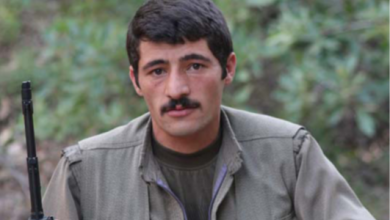
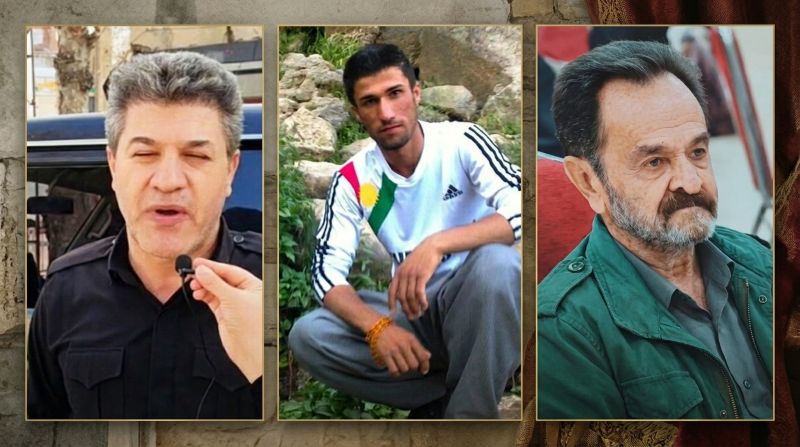
In late May 2026, the military wing of PJAK, known as the East Kurdistan Defense Units (YRK), officially claimed responsibility for the killing of an individual named Omid Vashkelani in the village of Towsuran, Marivan. In its statement, the group framed the action as a “punishment” and praised those involved in the operation. While the group accused Vashkelani of collaborating with the Iranian government, drug trafficking, and threatening dissidents, it provided no judicial ruling, independent investigation, or impartial legal proceedings to substantiate these allegations.
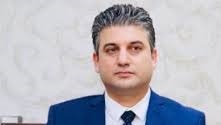
Days later, in another incident in Kamyaran, Mohammad Ebrahimi was targeted, with a group calling itself the “Patriotic Youth of Kurdistan” claiming responsibility. Published reports associate this group as an affiliate or front organization for PJAK. In this case as well, the victim was labeled with security-related charges and alleged government collaboration. Crucially, available information indicates that Ebrahimi was an elderly man targeted in a non-combat environment, far removed from any armed engagement.
Two cases, two cities, two statements—yet a single underlying logic: Allegation → Organizational Determination → Execution → Claim of Responsibility. What is entirely absent from this chain is the bedrock of any genuine system of justice: independent investigation, the right to defense, evidentiary evaluation, judicial sentencing, and the right to appeal.
Under these circumstances, the term “punishment” ceases to be mere propaganda; it represents a far broader claim: that an armed entity possesses the authority to adjudicate crime and exact retribution. This is precisely where the boundary between armed resistance and gunmen rule dissolves.
While comparing this pattern to the “Stalinist terror machine” may lack institutional alignment given the historical vastness of the Soviet state under Stalin, utilizing the Stalinist model as an analytical metaphor remains relevant. It highlights the political logic of elimination: criminalizing dissent, transforming unsubstantiated allegations into verdicts, and physically eliminating individuals without due process.
In classic models of political terror, the victim is first politically re-categorized: “traitor,” “enemy agent,” “spy,” “collaborator,” or “enemy of the people.” This political label is then used to strip the individual of all basic rights. Subsequently, the killing is reframed not as murder, but as “cleansing,” “punishment,” or “defending society.”
What makes this logic dangerous is not merely the bullet, but the distortion of language itself. When the execution of a human being is rebranded as “punishment,” the armed group attempts to hijack the very concept of justice. This trend, exhibited recently by YRK and PJAK-affiliated groups, must be addressed with utmost seriousness. The cases in Marivan and Kamyaran—alongside more than ten reported assassinations across Iranian Kurdistan in a short span—cannot be dismissed as isolated occurrences.
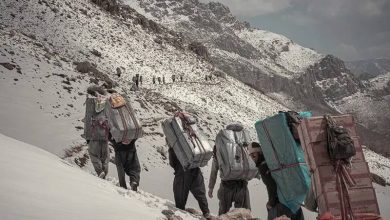
Over previous years, similar reports have documented PJAK and its affiliates targeting civilians. In one documented case in 2020, Soran Akhtar Samar, a border carrier (Kolbar) and resident of the Oramanat region in Marivan, was targeted and killed following his abduction by PJAK operatives, an incident detailed across multiple independent sources.
Naming individual victims is essential: when political assassination is sanitized using terms like “operation,” “punishment,” or “security target,” the victim’s humanity is erased from the narrative.
Behind every case lies a human life: Mohammad Ebrahimi, Omid Vashkelani, Soran Akhtar Samar, and others. Surrounding them are families completely ignored in organizational press releases and the heroic propaganda of violence-driven groups like PJAK. This human reality is precisely what political discourse habitually erases.
Under International Humanitarian Law, clear distinctions govern armed conflict, and an individual’s past background or alleged affiliations cannot unilaterally justify targeted killing. If a person directly participates in active combat at a specific time, international laws governing armed conflict apply. However, if an individual is targeted at home, in a workplace, on a farm, or in a non-combat environment outside active hostilities, the legal reality changes entirely. Simply labeling a person a “collaborator” or “enemy” can never grant an armed group the legal authority to deprive them of life.
Article 6 of the International Covenant on Civil and Political Rights (ICCPR) unequivocally safeguards the right to life. Furthermore, even in situations of armed conflict, fundamental humanitarian principles—such as the distinction between civilians and military objectives, the explicit prohibition of attacks against non-combatants, and mandatory civilian protections—remain strictly binding.
An individual’s past acts can never serve as a license for extrajudicial killing. If someone has committed a legitimate crime, evidence must be reviewed through lawful channels. If an immediate threat exists, force must be governed by international norms on the use of force. Turning an armed group into a clandestine tribunal violates the most fundamental tenets of justice. Perhaps the greatest danger in these assassinations is not only the loss of life, but society’s institutionalized reaction to it. The logic of political terror begins with a single victim, but spreads through a climate of fear.
When citizens realize an armed organization can accuse and eliminate anyone without presenting proof to an independent authority, the outcome extends beyond individual mortality: it alters the behavioral fabric of the entire community.
Citizens fall silent. Witnesses refuse to speak. Families fear pursuing justice. Dissidents self-censor. Society gradually internalizes the notion that certain individuals possess no right to defense. At this point, political violence transforms from an operational tactic into a mechanism of social control—mirroring the exact mechanisms of total control deployed under Stalinism. This prompts a necessary question: why is there no widespread public condemnation of such acts?
One primary cause is extreme political polarization. In an environment where criticizing an armed group is immediately branded as “siding with the regime,” many activists and media outlets choose silence over principle.
Human rights principles hold meaning only when defended against all perpetrators, including popular or politically aligned actors. If defending the right to life is conditional upon the political identity of the victim, it ceases to be a universal principle. Kurdish society requires this moral independence above all to transcend violence. Denouncing extrajudicial killings by PJAK or any other armed group does not constitute endorsement of state policies. However, focusing on assassinations must not blind us to the underlying socio-economic context.
Portions of the Kurdish border regions face acute economic deprivation. Independent human rights reports over recent years consistently document poverty, unemployment, lack of economic opportunities, and the severe hazards associated with cross-border carrying (Kolbari). While some reports attribute these conditions to structural discrimination, such assertions reflect analytical interpretations by reporting bodies rather than fully verified consensus beyond political debate. Nevertheless, an undeniable reality remains: economic underdevelopment is a pressingly real policy challenge.
The practice of Kolbari vividly illustrates this distress. Independent reports have documented numerous casualties among border carriers in recent years. This phenomenon cannot be reduced to a single cause; regional geography, border economies, limited employment, formal trade restrictions, and security dynamics all intersect.
From this standpoint, regional development along border areas is not a secondary issue, but a critical component of violence prevention. While poverty is not the sole cause of violence, it creates fertile ground for exploitation. A dangerous oversimplification must be avoided here: claiming that “poverty directly causes youth to join armed groups” is academically flawed. Millions living in poverty never join armed factions. However, economic deprivation raises the opportunity cost of civic life and, alongside political identity, social networks, ideological propaganda, family background, and perceived marginalization, heightens the vulnerability of certain individuals.
Consequently, economic development must form part of the solution to violence, though it cannot replace legal and security measures. While armed group activities present a major obstacle to regional growth, this reality does not relieve the state of its obligation to foster sustainable development. Conversely, achieving long-term security requires more than border controls and military countermeasures.
Sustainable security takes root when border youth can build a future through education, employment, enterprise, and civic participation. Creating jobs, expanding educational and medical infrastructure, facilitating legal border trade, fostering local investment, and reducing reliance on the informal economy can significantly reduce recruitment into armed organizations over time.
This is not a political concession; it is a pragmatic strategy for reducing insecurity. Yet economic development can never excuse murder. A clear boundary must be maintained: poverty and unemployment may explain the socio-economic backdrop, but they never justify extrajudicial killing.
If lack of economic opportunity leads a young person to join an armed faction, it underscores the urgent need for development—it does not legitimize armed operations or summary executions. If an individual has committed an offense, accountability must proceed under the rule of law, not through summary “punishment” enforced by an armed faction.
The term “Stalinism” must be understood through the logic of political elimination rather than historical scale. Revisiting the Stalinist model becomes increasingly crucial in this context.
The argument is not that PJAK is equivalent to the Soviet state apparatus under Stalin; such a comparison would be historically and institutionally inaccurate.
Rather, the parallel lies in the shared political logic of elimination: defining an individual as an “enemy,” treating unverified claims as absolute truth, executing them extrajudicially, and portraying physical liquidation as “justice” or “punishment.”
Regardless of scale, this logic directly undermines the rule of law. Political terror becomes exponentially more dangerous when its perpetrators not only carry out killings without hesitation, but construct an ideological framework to legitimize them. Herein lies the fundamental issue with PJAK: it transcends typical armed engagement and directly attacks the right to life.
Ultimately, the central premise is clear: no armed organization possesses the authority to supplant a court of law. Erasing this line blurs the distinction between justice and lawless vengeance. Iranian Kurdistan must not remain trapped between competing systems of violence. The Kurdish population legitimately demands development, dignity, security, political participation, and equal opportunity. Yet these aspirations are rendered impossible under the continued dominance of armed violence.
Every extrajudicial assassination invites retaliation. Every act of vengeance fuels subsequent operations. Every military action degrades public security, which in turn deters investment and development. This creates a self-reinforcing cycle where violence and economic stagnation continually feed into one another.
Breaking this cycle requires three simultaneous commitments: first, unequivocally condemning and stopping extrajudicial killings and summary executions; second, ensuring independent legal accountability for every violation of the right to life; and third, implementing comprehensive, sustainable development strategies across border regions. None of these elements can replace the others.
The core challenge in Iranian Kurdistan today is whether a society can be built where no individual feels compelled to take a life to prove political loyalty, and no citizen is driven into armed groups by poverty and lack of opportunity.
To achieve such a society, the state must prioritize sustainable development; armed groups must abandon the logic of political elimination and extrajudicial executions; and civil society must uphold a single, uncompromised standard for the human right to life.
One cannot champion self-determination while disregarding the right to life of political opponents. One cannot speak of freedom while executing individuals without trial. One cannot claim to defend the rights of the Kurdish people while remaining silent on the assassination of Kurdish citizens. And one cannot discuss security while ignoring the socio-economic deprivations that heighten societal vulnerability.
If Kurdistan is to break free from the cycle of violence, one non-negotiable principle must be accepted above all: no political cause, ideology, or armed organization is sacred enough to justify depriving a human being of their right to life.