
This interview was conducted at the Iranian Kurdistan Human Rights Watch (IKHRW) office in Sanandaj. To ensure the personal safety and security of the interviewee, his identity is protected under the pseudonym “Khorshid.”
Khorshid returned to Sanandaj approximately two years ago. His voice is soft, but whenever he speaks of the mountains where he spent four years of his life, he pauses—as though he still cannot believe he made it out alive. He was twenty-six years old, unemployed, solitary, and lacking any reliable support system when a friend encouraged him to join the Kurdistan Freedom Party, commonly known as PAK. His friend, who was an official cadre within the organization, made a simple promise: a job similar to military service, a monthly salary, and the ability to return home every Thursday and Friday. Khorshid had no prior knowledge or understanding of the organization. That lack of information ultimately cost him three and a half years of his youth.
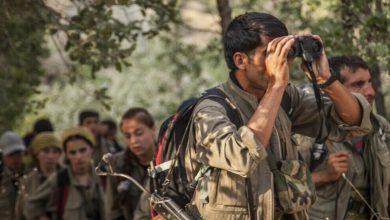
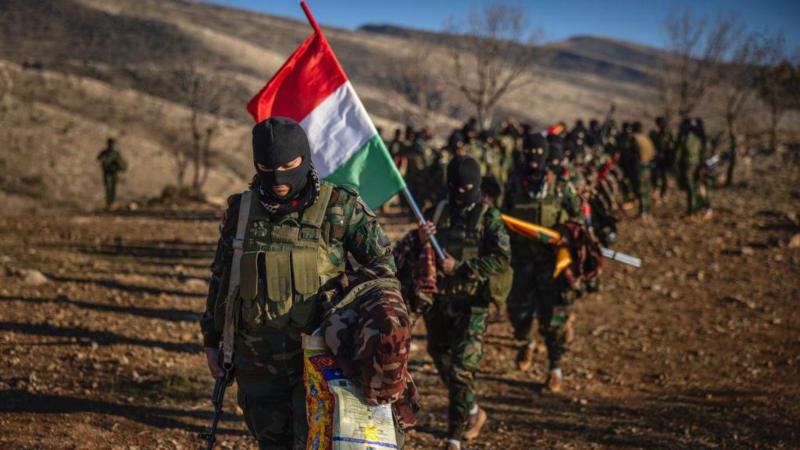
From the moment he set foot in the camp, he realized there was no turning back. What he and dozens of others had been told stood in stark contrast to reality. He notes that from day one, the atmosphere felt toxic, and contrary to the carefully curated image presented in front of cameras, no one in those camps was happy or satisfied; everyone was merely pretending. Daily life resembled an endless military prison camp: a 6:00 AM wake-up call, morning assemblies, mandatory Kurdish language classes, military drills with AK-47 rifles, crawling exercises, and alongside all of this, agricultural labor, guard duty, and reaching out to adolescents across the border via social media to recruit new forces. Disobeying any of these duties, according to him, resulted in beatings and torture.
What torments Khorshid most of all is the presence of children among the ranks. He explains that individuals his age were not the only ones living in those mountains; children aged twelve, thirteen, and fourteen were targeted through social media platforms—Instagram, Telegram, WhatsApp, and Facebook—and lured into membership using the exact same deceptive tactics that had fooled him. These were children facing emotional or family hardships, enticed from afar with false promises and then integrated into a system where, as he puts it, “whether you were ten years old or fifty, everyone performed the same forced labor—the same slavery.”
Returning home to one’s family was virtually impossible within this structure. Khorshid notes that only after proving absolute loyalty and making repeated, desperate pleas would a brief telephone call be permitted, always in the presence of party commanders. If a family encouraged their child to return during that call, or if the individual expressed any desire to leave, severe consequences followed. Anyone requesting to leave was accused of espionage, subjected to torture, or imprisoned in underground dungeons. He personally witnessed an individual accused of stealing a minuscule sum of money—without any trial or legal process—who was placed under such immense pressure that he ultimately ended his life at a guard post.
Financially, according to Khorshid, the organization operated on an exploitative model. Each member was nominally allocated an amount equivalent to 25,000 Iraqi Dinars per month, but this money was never handed to the individuals themselves. Instead, it was turned over to the party’s “logistics officer,” who would purchase basic necessities every two to three months. He emphasized that a significant portion of the financial stipends provided by the Kurdistan Regional Government (KRG) for each Peshmerga fighter never actually reached the personnel.
This testimony is not an isolated narrative. Kurdish media outlets in recent years have reported on lawsuits filed by several female members of the party in the Erbil Court. These legal complaints centered on being forcibly prevented from returning to their home country and being subjected to mandatory service that could last up to seven years. Based on these reports, dozens of members are forced into years of mandatory service under heavy coercion immediately upon arrival. The Kurdistan Freedom Party (PAK) has been led since 2006 by Hussein Yazdanpana, a military figure who assumed control of the organization following the assassination of his brother, Saeed Yazdanpana. Khorshid stated that during his tenure, asking any questions regarding Yazdanpana was strictly forbidden, and even raising a simple query could lead to torture or physical liquidation.
Today, Khorshid works in Sanandaj in a factory and occasionally as a motorcycle courier. He states that despite his modest income, he no longer faces forced labor or torture, which is enough for him. However, the picture he brought back from behind those mountains is one of a system where basic human freedom—the right to leave an organization, the right to contact one’s family, the right to say “no”—is systematically erased; a system where underage children are recruited into military service, dissent is met with physical punishment, and human death occurs without accountability or investigation.
The audio recording of this interview is preserved in the archives of the Iranian Kurdistan Human Rights Watch (IKHRW) and can be made available confidentially to researchers, law students, legal scholars, documentary filmmakers, and human rights activists upon request.