
Forty days after the United States, Israel, and their regional allies launched a military campaign against Iran, the parties signed a ceasefire agreement. Many political analysts warned immediately that this deal represented a temporary pause rather than lasting peace. Recent renewed civilian infrastructure attacks across Iran prove those warnings entirely accurate.
The United States administration continuously attempts to portray itself as the victor. However, the ground reality tells a vastly different story. Instead of forcing strategic political concessions or behavioral changes, the campaign has produced widespread civilian suffering and regional instability.
This situation raises a fundamental question. Why did Donald Trump violate a diplomatic agreement that his own administration helped shape? When global superpowers respect international treaties only when convenient, they destroy the credibility of global diplomacy and the foundational principle of treaty compliance.
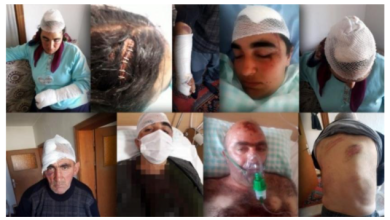
The United Nations Charter strictly limits the use of military force. Additionally, the Geneva Conventions and their Additional Protocols legally obligate all combatants to separate military targets from civilian populations. Armed forces must respect the principle of proportionality and safeguard essential services like water networks, power grids, healthcare systems, and educational facilities. Targeting these critical networks transforms millions of innocent citizens into casualties of war.
The tragic bombing of the Minab school was not an isolated mistake. It signals a complete collapse of basic human decency. A child dying under the rubble of a school plays no role in geopolitical decisions. No military doctrine or national security strategy can justify the slaughter of innocent children.
The destruction of public infrastructure inflicts long-term damage that outlasts the actual combat. Ruined hospitals, broken bridges, and destroyed power plants penalize families for generations. The true victims are the patients denied life-saving medical care and the children stripped of their education.
The absolute silence of global institutions raises disturbing questions. The United Nations Security Council has failed its primary obligation to maintain international peace and security. Similarly, the Human Rights Council, UN Special Rapporteurs, and the International Committee of the Red Cross have failed to deliver a meaningful response. This inaction suggests that international law applies selectively, granting absolute immunity to powerful states.
Twentieth-century history demonstrates that ignoring aggressive political leaders brings catastrophic consequences. Failing to confront early violations never secures peace; it merely accelerates future conflicts.
If the international community ignores these civilian infrastructure attacks today, other aggressive actors will adopt the exact same pattern tomorrow. International law loses all meaning when global powers treat it as an optional text rather than an enforceable standard.
Defending the Iranian people goes beyond protecting one nation. It means defending the United Nations Charter and human dignity. If the international community fails to halt this dangerous escalation, the resulting crisis will engulf the entire Middle East.
By Dr. Pourshams