
Author: Hirad Rahmanpour
Military actions against power plants, hospitals, and civilian sites in the Spring of 1405 have crossed the boundaries of “military necessity” and sounded the alarm bells for “collective punishment.”
War, in the realm of international law, is not a lawless state, but a phenomenon where the legitimacy of the exercise of power is always measured against the yardstick of International Humanitarian Law (IHL). The hostile assault by the Zionist-US regime on civilian infrastructure during the “Ramadan War” represents a profound breach in compliance with international peremptory norms, extending far beyond a conventional military confrontation. When a nation’s vital lifelines—from power grids and fuel depots to schools and relief centers—are subjected to targeted attacks, the concept of “military necessity” is co-opted in favor of collective punishment. This note, referencing legal standards and data recorded up to mid-Farvardin 1405, explains the dimensions of this flagrant violation.
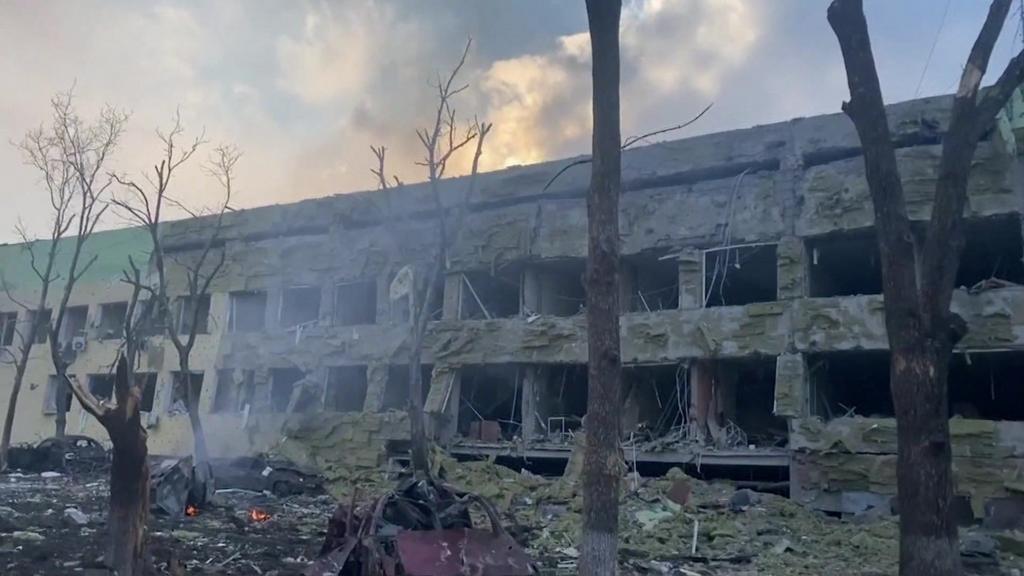
Violation of the principle of distinction and assault on civilian property is the first and most fundamental tenet of international humanitarian law, known as the “Principle of Distinction.” Under Article 48 of Additional Protocol I to the Geneva Conventions (1977), parties to a conflict must at all times distinguish between combatants and civilians, as well as between military objectives and civilian objects. However, data recorded up to mid-Farvardin 1405 presents a stark illustration of this principle being disregarded: the destruction of or severe damage to over 19,755 residential units and 4,511 commercial units demonstrates that the scope of attacks has expanded beyond military targets into urban and rural living environments. Infrastructure lacking direct military function is immune from assault under Article 52 of the same protocol, and any attack on them is considered an explicit violation of peremptory norms (Jus Cogens).
The foundations of survival and inalienable rights are also covered under Article 54 of Protocol I. International law specifically prohibits attacks on facilities essential to the survival of the civilian population. The destruction of fuel depots, power plants, and energy transmission infrastructure is not merely damage to physical assets; it cuts off the supply chain for the “right to health” and the “right to life.” When a hospital fails to provide services due to a lack of electricity or fuel, the resulting casualties are directly attributed to the attacking force. Furthermore, reports of damage to 69 schools constitute an assault on the “right to education” (Article 13 of the International Covenant on Economic, Social and Cultural Rights), yielding destructive generational and cultural impacts. These actions are evaluated not as collateral damage, but as a targeted destruction designed to paralyze the foundational systems of a society.
Perhaps the darkest chapter in the legal record of this assault is the attack on 16 Red Crescent centers and 21 ambulances. Under the First and Fourth Geneva Conventions, mobile and fixed medical units and relief personnel exclusively assigned to the treatment of the wounded and sick enjoy special protection. Assaults on ambulances and medical staff within the framework of international law are described not only as war crimes but as a form of “legal barbarism” intended to strip civilians of their last chances of survival. These attacks have entirely compromised the “Principle of Humanity,” which is the governing spirit of the law of war.
The widespread and systematic nature of these attacks on infrastructure invalidates the hypothesis of “operational error” and reinforces the premise of “Collective Punishment.” According to Article 33 of the Fourth Geneva Convention, punishing civilian individuals for offenses they have not personally committed is absolutely prohibited. When the objective of attacking power plants and distribution networks is to pressure the collective will of a nation by depriving them of basic needs, the available evidence points toward a “Joint Criminal Enterprise” which, under the Rome Statute of the International Criminal Court (ICC), can be classified as crimes against humanity or war crimes.
From the perspective of the law of international responsibility (Draft Articles on Responsibility of States for Internationally Wrongful Acts), any internationally wrongful act committed by a state or forces under its control entails accountability and the obligation to make reparation. The destruction of Iranian infrastructure on this massive scale, beyond financial damage, constitutes “damage to the international public order.” Accordingly, the international community is obligated not only to condemn these actions in political statements but also to activate legal mechanisms for rigorous fact-finding and the prosecution of the perpetrators and commanders of these attacks.
The absolute condemnation of the hostile assault on infrastructure during the Ramadan War is a concrete embodiment of the systematic violation of human rights and humanitarian law. These actions are viewed as an attempt to regress the logic of war back to an era prior to legal civilization—a period where no boundaries existed between combatants and civilians. These attacks are decisively condemned based on four grounds: the deliberate violation of the principle of distinction, the targeting of facilities indispensable for survival, assaults on protected relief institutions, and the implementation of a policy of collective punishment. The history of international law will bear witness that silence in the face of the systematic destruction of vital living infrastructure amounts to signing the decree for the moral decay of global norms. Justice demands that not only physical perpetrators but also the macro-architects of this “assault against infrastructure” be held accountable before competent tribunals. Defending civilian infrastructure is a defense of the material embodiment of human dignity, and any leniency in this regard can be interpreted as a license for more horrific crimes in the future.