
Under the Convention on the Rights of the Child and its Optional Protocol on the Involvement of Children in Armed Conflict, the recruitment and use of individuals under the age of 18 in armed conflicts by non-state armed groups is strictly prohibited. Consequently, states are legally obligated to implement prevention mechanisms, enact domestic criminalization, and take effective action to halt this trajectory.
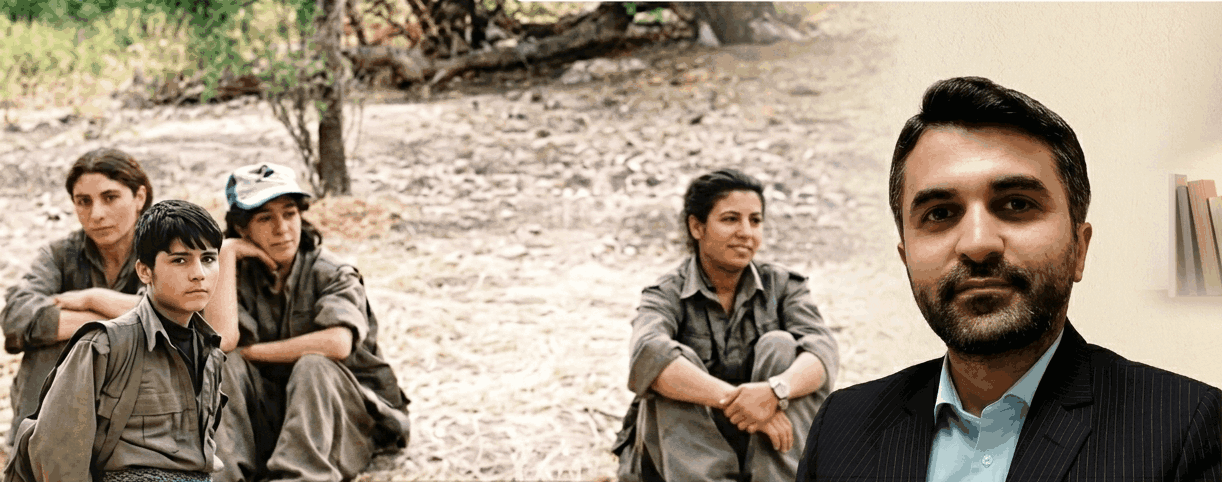
According to a report by the Iranian Kurdistan Human Rights Watch (IKHRW), Ali Ahadi, a faculty member at the Farabi Campus of the University of Tehran, has analyzed the legal dimensions of utilizing children in armed conflicts in a newly published commentary.
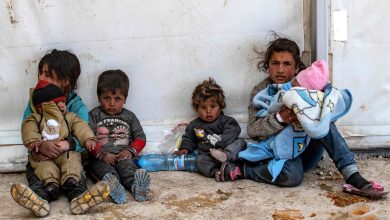
From the perspective of international humanitarian law (IHL), the protection of civilians—particularly children—constitutes one of the fundamental rules of warfare. Attacks directed against schools, hospitals, residential homes, and relief centers, provided they have not been converted into military objectives, can be deemed severe violations of the principles of distinction, proportionality, and precaution enshrined in Additional Protocol I to the 1949 Geneva Conventions. These principles strictly obligate conflicting parties to maintain a clear distinction between military targets and civilians, and to refrain from inflicting disproportionate harm upon civilian populations.
Furthermore, international humanitarian law explicitly prohibits attacks targeting critical infrastructure, such as water and electricity facilities, medical centers, and other resources indispensable to the survival of the civilian population. The destruction of such infrastructure can yield direct, long-lasting adverse impacts on the fundamental rights of civilians, most notably children.
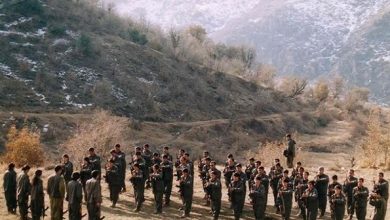
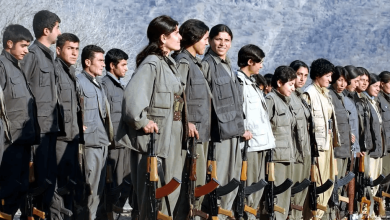
Alongside this structural legal framework, documentation compiled by credible international bodies corroborates documented patterns of child recruitment in regional conflicts. Human Rights Watch (HRW), in its field reports concerning Iraq, has stated that certain armed groups operating in various regions—including structures affiliated with Kurdish armed factions—have engaged in the recruitment and exploitation of individuals under the age of 18.
These findings document instances of military training, guard duties, and active participation in paramilitary activities. Human Rights Watch underscores that under international law, even the “apparent consent” of a child does not legitimize such exploitation, and these practices can amount to a grave breach of the laws of war.
Regarding Syria, the same organization has published parallel findings documenting the recruitment of minors within military structures linked to certain non-state forces.
In these accounts, the ongoing recruitment of children—manifested despite formal commitments to cease the practice—is flagged as a severe human rights concern. The UN Secretary-General’s annual reports on “Children and Armed Conflict” have consistently validated this recurring pattern across several volatile areas, including Iraq and Syria.
From an international legal standpoint, the 1989 Convention on the Rights of the Child mandates that states provide special protection to children during armed conflicts. The Optional Protocol on the Involvement of Children in Armed Conflict (2000) explicitly prohibits the recruitment of persons under 18 by non-state armed groups and requires state parties to adopt all necessary legal and administrative measures to prevent and criminalize such acts domestically.
The deployment of children as protective shields or human shields is similarly outlawed under international humanitarian law. Depending on the fulfillment of specific criteria, such acts can be prosecuted as war crimes under the Rome Statute of the International Criminal Court (ICC).
Regarding state responsibility, international law dictates that host states, or states exercising effective control over a territory, are legally bound to take reasonable, due-diligence measures to suppress the unlawful operations of armed factions and safeguard children’s rights. Continuous and severe failure to act upon these state duties can, depending on the state’s awareness and capacity to intervene, invoke international state responsibility.
In summary, the combined data from human rights organizations and United Nations reports demonstrates that child soldiery in certain conflict zones is not an isolated phenomenon, but rather a recurring structural pattern. Addressing it effectively requires independent monitoring, unhindered field access for fact-finding missions, and the rigorous enforcement of international obligations by both territorial states and warring parties.
Sources and Legal References
-
Iranian Kurdistan Human Rights Watch (IKHRW) — Legal archives and regional documentation on child recruitment.
-
Human Rights Watch (HRW) — Comprehensive reports on the recruitment and use of minors in Iraq and Syria.
-
United Nations Secretary-General — Annual Reports on Children and Armed Conflict.
-
Geneva Conventions of 1949 & Additional Protocol I — Rules regarding distinction, proportionality, precaution, and civilian objects.
-
UN Convention on the Rights of the Child (1989) & Optional Protocol on the Involvement of Children in Armed Conflict (2000).
-
Rome Statute of the International Criminal Court (ICC) — Provisions on war crimes regarding child soldier recruitment.