
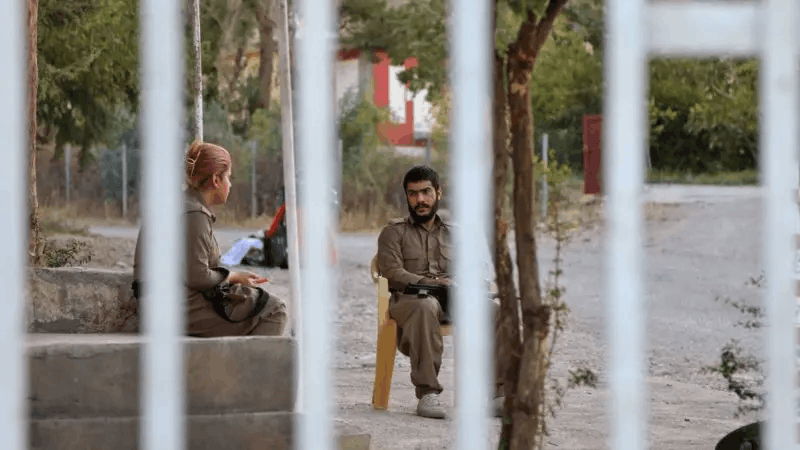
According to reports and data obtained by the Iranian Kurdistan Human Rights Watch (IKHRW), several Iranian citizens residing or working in the Kurdistan Region of Iraq have been detained by the regional security forces, known as Asayish. According to these reports, the arrests were conducted not through a transparent or legal judicial process, but based on ambiguous claims and pretexts.
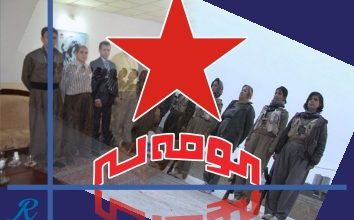
What makes these reports increasingly alarming is the allegation of the forced transfer of these individuals to an armed group known as PAK (the Kurdistan Freedom Party). Over recent years, PAK has faced numerous accusations regarding human rights violations, restricting the freedom of its members, ideological pressure, and non-transparent recruitment methods. Such actions could constitute multi-layered violations of international human rights law and even international humanitarian law.
Under the fundamental principles of international law, no security or government official has the right to hand over detainees to a non-state armed actor outside of a legal process—especially when there is a risk of coercion, ill-treatment, forced military training, or the deprivation of the right to leave.
Article 9 of the International Covenant on Civil and Political Rights (ICCPR) emphasizes the prohibition of arbitrary detention and mandates that any deprivation of liberty must occur under judicial and legal supervision. Furthermore, Article 8 of the same Covenant prohibits all forms of forced labor or compulsory service.
The forced transfer of individuals to an armed group can be legally categorized as a form of “unlawful handover to an armed actor” and potentially as indirect participation in the recruitment process for paramilitary groups. The sensitivity of this issue escalates with reports suggesting financial motives and the payment of bounties in exchange for transferring individuals to this group—claims that could involve dimensions of criminal liability and organized corruption.
From the perspective of State Responsibility, the Kurdistan Regional Government (KRG) cannot dismiss the actions of the Asayish forces as mere “individual misconduct.” Under the rules of international state responsibility, every act by official security forces is attributable to the governing structure and the host state. Therefore, both the KRG and the Central Government of Iraq bear the responsibility to provide accountability, conduct an independent investigation, and prevent the recurrence of such behavior.
This matter is also significant in light of Iraq’s security obligations toward Iran. Baghdad had previously committed, within the framework of security agreements with Iran, to limit the activities of armed opposition groups on Iraqi soil and to disarm them. The actions of security agencies affiliated with the KRG in strengthening the manpower of these groups may stand in direct conflict with the official commitments of the Iraqi government.
Furthermore, according to international standards, every detainee must enjoy the right to contact their family, access to legal counsel, and be informed of the charges against them. Transferring individuals to an armed group outside these mechanisms can facilitate enforced disappearance, illegal detention, and the violation of human dignity.
The Iranian Kurdistan Human Rights Watch (IKHRW) has stated that it is currently collecting supplementary information, documentation, and further testimonies regarding this case. It is imperative that international human rights bodies and UN Special Rapporteurs conduct an independent and transparent investigation into these allegations, as silence regarding the cooperation between official institutions and armed actors can lead to the erosion of the rule of law.