

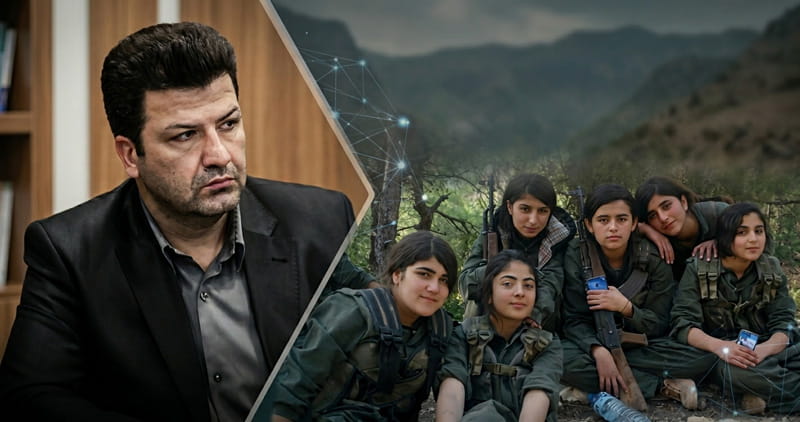
By: Keyvan Darabkhani, Public Law Researcher
In recent years, field reports and documented cases have revealed a disturbing pattern in certain border regions of Western Iran: the gradual recruitment of children and adolescents into networks affiliated with non-state armed groups.
While this phenomenon is often viewed primarily as a security threat, its deeper layers are rooted in a complex web of social vulnerabilities, communication gaps, and failures in the socialization process of the younger generation. The reality is that, contrary to oversimplified analyses, “poverty” is not the sole driver of this trend.
Field experiences and findings from international research indicate that what truly exposes an adolescent to such high-risk choices is, above all, a “sense of invisibility,” “perceived discrimination,” and an “identity crisis.” In these circumstances, any actor capable of filling this void—even with false promises—stands a high chance of exerting influence.
The family, as the primary protective institution, plays a decisive role. In many documented cases, an emotional and communicative rift is observed between parents and adolescents. This gap is not necessarily due to neglect but is often the result of rigid parenting styles that lack effective dialogue. An adolescent who finds no space to express desires, experience gradual independence, or receive emotional support at home will naturally seek alternatives elsewhere. This is precisely where recruitment networks step in. Contrary to popular belief, these networks rarely use direct violence initially; instead, they employ “soft” and gradual techniques to build trust.
The digital landscape serves as the primary medium for this connection. The dominant pattern starts with a simple conversation on social media: empathy, attention, and non-judgmental listening. Gradually, promises follow—ranging from financial support to the portrayal of a different, “free” life. For an adolescent searching for identity and meaning, this narrative can be incredibly alluring.
The process eventually reaches a more dangerous stage: the gradual severance of ties with the family, psychological dependence on the recruiter, and finally, the persuasion to leave their home environment. Existing reports show that many of these individuals, upon entering such structures, are confronted with a reality starkly different from the initial promises—a reality often characterized by severe restrictions and a total lack of personal freedom.
From a legal perspective, the dimensions are clear. The involvement of individuals under the age of 18 in armed activities is a violation of fundamental rights under international standards, including the Convention on the Rights of the Child. This is not merely a political issue; it is a critical matter within the framework of human rights obligations.
The key question remains: how can we prevent this cycle from repeating? The answer does not lie solely in security measures. Global experience shows that sustainable defiance against this phenomenon requires a multi-layered approach.
First, families must be empowered. Teaching communication skills, bridging the generational gap, and strengthening internal family dialogue are among the most vital preventative measures. Next, providing real opportunities for youth—ranging from employment to cultural and athletic activities—can offer healthy and attractive alternatives. Simultaneously, the media must move away from stereotypical and judgmental narratives toward accurate, empathetic awareness-building.
Ultimately, we must accept that this issue cannot be solved through “labeling” but requires “understanding the roots.” An adolescent lured into such networks is not just a threat; they are a “symptom”—a sign of societal rifts that, if not properly addressed and repaired, will impose much heavier costs on society in the future. Managing this phenomenon requires neither denial nor exaggeration, but realism, intelligent intervention, and a simultaneous focus on security and social capital.