
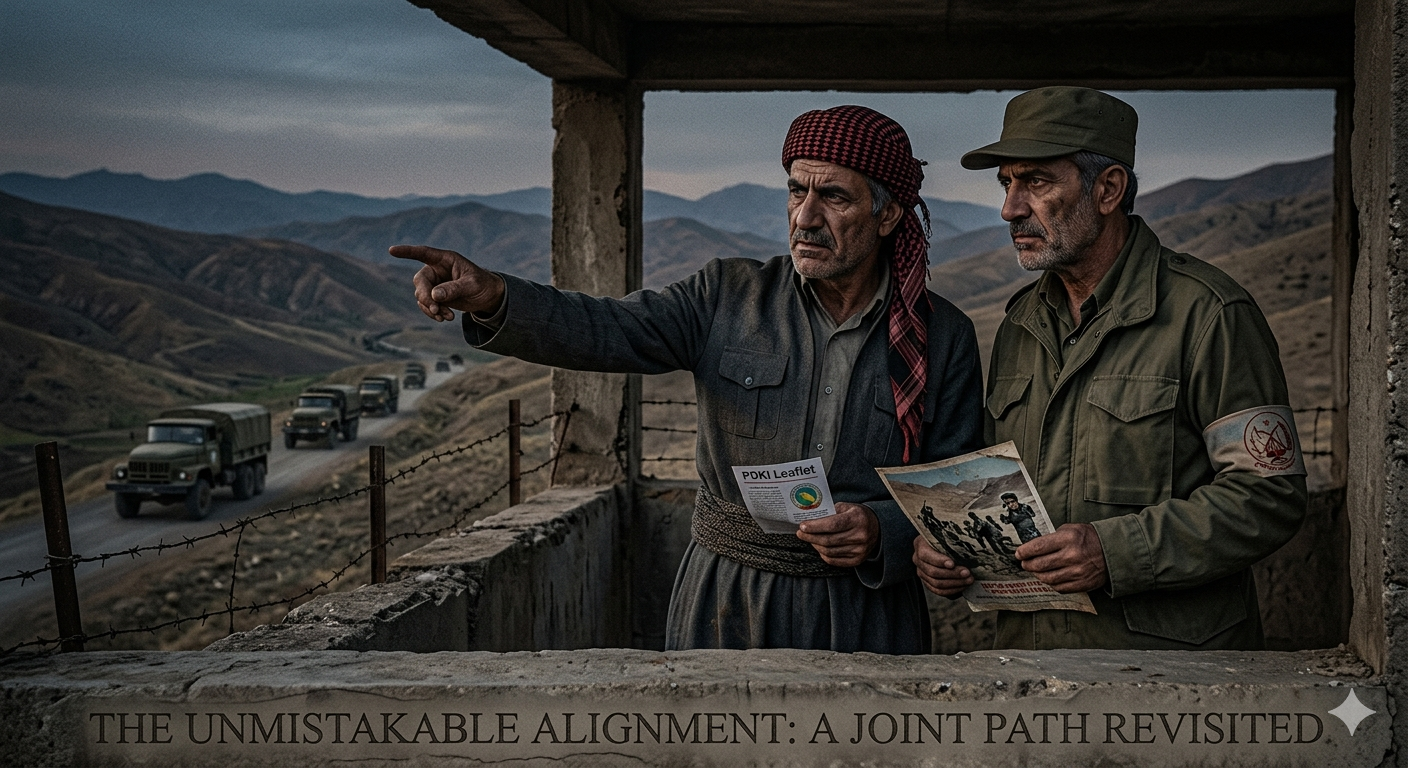
The recent statement by the Kurdistan Democratic Party of Iran (PDK-I) in response to the punishment of two members of the Mojahedin-e Khalq (MEK) is viewed by analysts as more than a simple human rights stance. By offering official condolences to the organization itself, the PDK-I has moved away from neutrality, signaling a political alignment with a group whose history in Iran—especially in the western regions—is deeply intertwined with violence and direct military action.
Records of Violence in Kurdish Regions and Operation “Eternal Light”
Over the past decades, the MEK has claimed responsibility for extensive assassinations targeting thousands of Iranians, including many Iranian Kurds.
-
Cooperation with Saddam: The group’s direct collaboration with the Iraqi Ba’athist regime against Iran during the Imposed War remains a primary point of criticism.
-
Operation Eternal Light (Forough Javidan): This military operation, launched through western Iran (including Islamabad-e Gharb and Sarpol-e Zahab), is remembered by the Kurdish people for its brutality. Local accounts of the organization’s slogans, such as “Kill anyone who has a beard,” remain a symbol of the extreme violence of that era.
Historical Ties: From Abdul Rahman Ghassemlou to Masoud Rajavi
Historical records indicate deeper structural and political links between the two movements:
-
The Ba’athist Connection: Abdul Rahman Ghassemlou’s cooperation with Saddam Hussein mirrors the footage released after the fall of the Ba’athist regime showing Masoud Rajavi’s direct meetings with Saddam.
-
Organizational Similarities: According to the archives of the IKHRW (Iranian Kurdistan Human Rights Watch), many defectors from Kurdish armed groups have noted striking structural and organizational similarities between the Rajavi cult and the PDK-I after studying historical documents.
-
The Paveh Incident: The violent history of the PDK-I in the early years of the Revolution, including the events in Paveh, reinforces the belief among analysts that these two movements share similar military and political methodologies.
International Terrorist Designations and Political Pressure
A significant aspect of the MEK’s history is its long-standing presence on international terrorist lists:
-
Blacklists: The United States (until 2012), the European Union (until 2009), Canada (until 2012), and the United Kingdom (until 2008) all designated the MEK as a terrorist organization.
-
Removal via Political Pressure: The group’s removal from the U.S. State Department’s list in 2012 followed a 2010 D.C. Appeals Court ruling and was ultimately achieved through intense political lobbying and pressure from the U.S. government, rather than a fundamental change in the group’s nature.
Conclusion
The issuance of a condolence message by the PDK-I to the MEK is seen as a continuation of a long-standing political trajectory. Given the deep-seated resentment within a large portion of Iranian society toward the MEK’s history of terrorism and wartime betrayal, this stance by the PDK-I only reinforces the perception that these two movements share fundamental strategic goals and political paths.