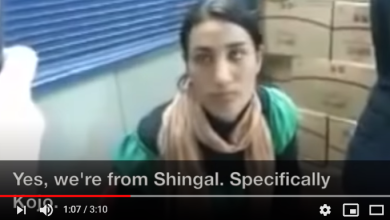

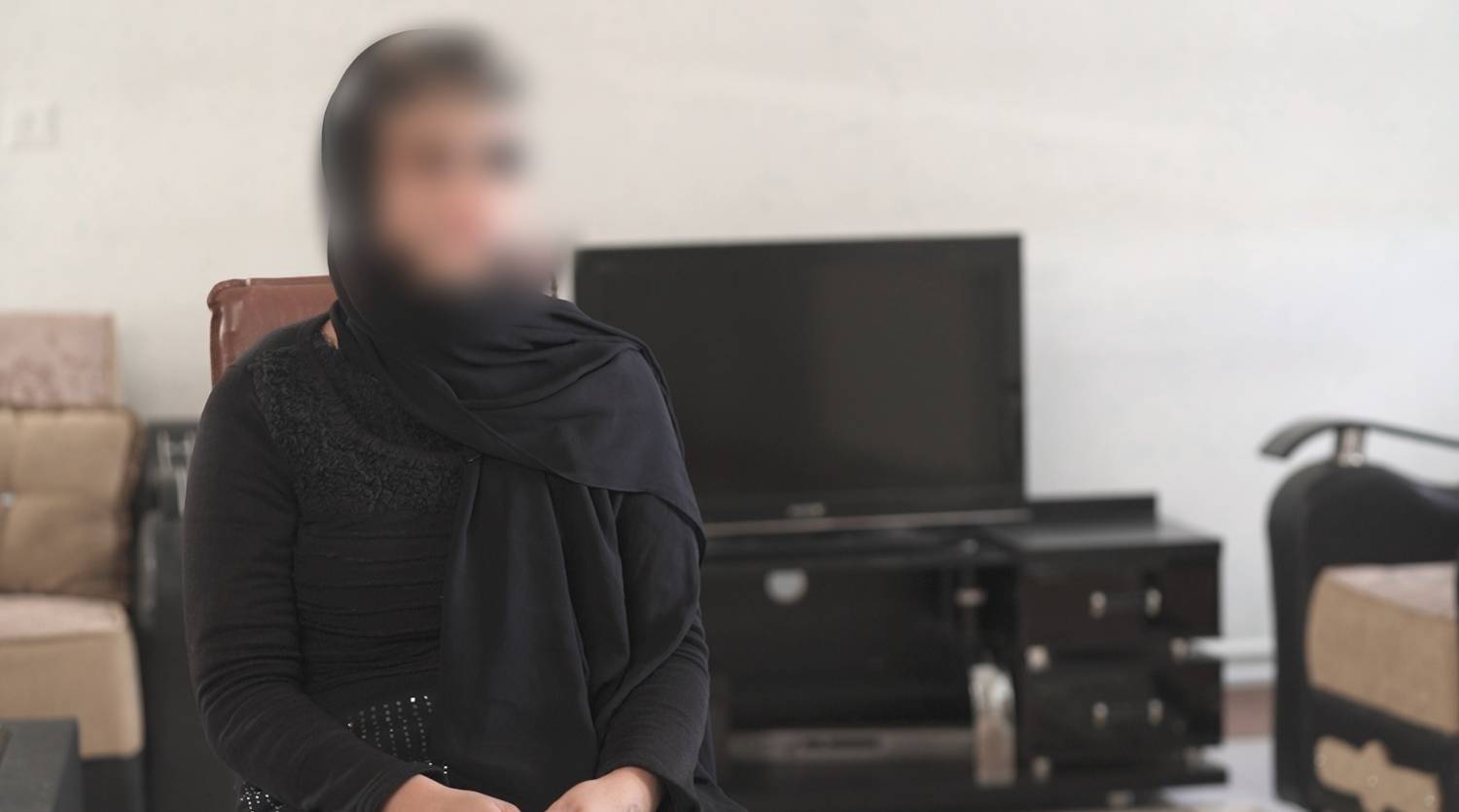
West Azerbaijan Province — Maryam Farrokhi, 18, from Piranshahr, says she had no direct knowledge of Komala before joining the group and was influenced primarily by a friend who spoke about living conditions there. According to Maryam, the image of “freedom” and life within Komala that she had formed before going there changed after she arrived.
Maryam says: “The reality is that I didn’t have a problem with things the way they described them. I liked what they said about the place and decided to go. They said it wasn’t like other places, such as the Democratic Party, and that made me interested in going.”
She says that after arriving, she realized that daily life there was governed by specific regulations, with sleeping and waking times, daily schedules, guard duties, and movements subject to orders from those in charge. According to Maryam, members woke up at around five in the morning and exercised until six, while at night they spent approximately two hours on guard duty. On some days, they also went to mountainous areas for training and walked for four to five hours.
Maryam says being separated from her family was one of the most important factors that made her uncomfortable in that environment. Most of the people there were strangers to her, and she says that living in such an environment was not pleasant for her.
Speaking about her understanding of freedom, she says: “In my opinion, freedom is not just about whether you wear a headscarf or not. Freedom means being comfortable, being with your family, and being happy.”
Maryam also describes strict rules during mountain training. According to her, if someone spoke with others during training, they could face a reaction from those in charge. She alleges that in some cases, shots were fired near people’s feet in order to frighten them or force them to comply with the rules. This part of her account, if independently corroborated, could constitute serious violent and intimidating conduct in a training environment.
Maryam also recounts an incident in which one person, after consuming alcoholic beverages, fired a weapon toward himself.
According to Maryam, there was extensive discussion of “freedom” in the environment where she stayed, but what she experienced in daily life differed from her own understanding of freedom. She says a significant portion of the conversations also concerned Iran’s political situation, criticism of the Islamic Republic, and criticism of other Kurdish parties.
Maryam says that during the period she spent with Komala, she witnessed an armed confrontation between Komala and the Democratic Party.
Another part of Maryam’s account concerns religion. She says that in the environment where she stayed, some people spoke about the non-existence of God and presented arguments denying God’s existence. Maryam says these discussions affected her thinking for a period of time and that even after returning to Iran, she believed for some time that God did not exist.
She says: “They put a lot of things into your mind. Even after I had returned, for a while I would say that God did not exist, but now I believe in God again.”
According to Maryam, conversations with her father after returning to Iran gradually led her back to her religious beliefs.
Maryam also says that during the period when she was undergoing training there, members were not provided with mobile phones. She describes firearms training and military exercises in mountainous areas, explaining that members practiced shooting, ambushes, and counter-ambushes.
She says: “We didn’t have actual operations, but we would go into the mountains, fire weapons, and practice ambushes and counter-ambushes.”
Maryam also discusses the financial situation of members. She says they were paid approximately 63,000 Iraqi dinars at the time, but part of the amount was deducted for food and other expenses. According to her, approximately 10,000 dinars remained for her after these deductions. She says she spent most of that amount buying cigarettes.
She also describes relationships among members, saying that if two people were in a relationship, they might eventually be provided with a place to live together without entering into a formal marriage or religious marriage contract. Maryam regards this situation as interference in people’s personal affairs and an intrusion into their privacy.
Another issue Maryam discusses is the promise of the possibility of traveling to Europe. According to her, while she was with Komala, members were told that people who remained with the group for three years might be able to use their membership history to apply to travel to Europe. At the same time, she says they were told that the costs of travel and living in Europe would be their own responsibility, and that she did not have detailed information about how those costs would be covered.
Maryam says that before returning to Iran, members were also warned about the possible consequences of returning. According to her, they were told that people with a history of involvement with Komala could face extremely violent treatment or even sexual assault if they returned to Iran.
However, Maryam says her own experience after returning was different: “When I returned to Iran, they really treated me well. They respected me and didn’t say the slightest thing that would upset me.”
The account of Maryam Farrokhi, from the perspective of a young woman, describes a range of personal experiences concerning living conditions, internal regulations, military training, guard duties, restrictions on communication, ideological pressure, financial matters, and relationships among members of Komala. Some parts of her account, particularly the allegation that shots were fired to intimidate individuals, require independent investigation and verification, and the interview alone cannot establish conclusively that such incidents occurred or determine legal responsibility for them.
The complete video of this interview is archived by Iranian Kurdistan Human Rights Watch and, if necessary, can be made available confidentially to researchers, human-rights activists, and lawyers.