
One of the central questions in documenting the conduct of armed groups in conflict zones is determining when their actions fall under international humanitarian law (IHL) versus domestic security operations governed by international human rights law (IHRL). This distinction fundamentally shapes the legal classification of crimes, command accountability, and the protection rights afforded to victims.
This critical boundary is analyzed by Jan Kleffner, Professor of International Law at the Swedish Defence University, in his 2019 study published in International Law Studies, titled “Legal Fog is an Illusion.”
Under customary international law, for an internal confrontation to qualify as a non-international armed conflict (NIAC), two cumulative criteria must be satisfied: the armed group must possess a minimum level of organization, and the hostilities must reach a sufficient threshold of intensity.
While international tribunals traditionally hold that no single factor is individually decisive in establishing these criteria, Kleffner contends otherwise. He identifies two indispensable conditions whose absence conclusively precludes the existence of an armed conflict: a defined command structure within the group, and the occurrence of genuine, two-way combat, rather than unilateral violence against civilians.
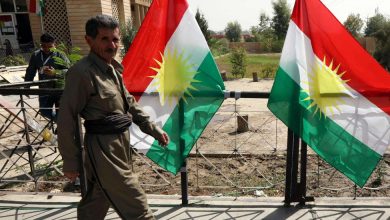
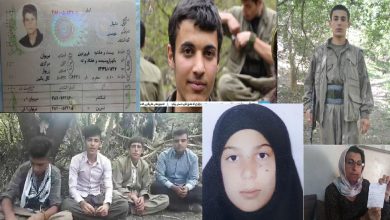
This distinction carries direct practical implications. When documenting the activities of Kurdish non-state armed groups—such as recruitment, detentions, or civilian treatment—investigators must first establish whether the group maintains an effective military hierarchy and whether actual combat against opposing forces took place. Without these two elements, the group cannot be subjected to laws-of-war obligations like Common Article 3 of the Geneva Conventions; instead, its conduct remains governed by IHRL and domestic criminal law.
Kleffner also addresses whether the organization threshold should be measured against an entire political movement or exclusively its military wing. He asserts that legal scrutiny must focus strictly on the military branch. This distinction holds significant relevance for regional analysis, as several Kurdish political entities maintain distinct political and military structures; legal evaluations must focus strictly on the armed wing rather than the overarching political organization.
Addressing complex theaters involving multiple active factions—such as Syria or the Democratic Republic of the Congo—Kleffner examines scenarios where no single group’s violence independently reaches the intensity threshold, yet their collective impact is severe.
In response, Kleffner defends an aggregation approach, arguing that total violence within a specific spatio-temporal frame must be calculated collectively. Otherwise, victims risk being denied legal protections simply due to the fragmentation of non-state actors—a consideration highly relevant to regions like Kurdistan. However, he cautions against unrestricted aggregation, warning it could replicate the problematic “Global War on Terror” model by inappropriately applying IHL instead of human rights protections where the threshold of war has not truly been met.
Ultimately, an armed group’s legal status is determined not by political rhetoric, but by three objective criteria: effective military command, genuine combat engagement, and spatio-temporal continuity of violence. For the Iranian Kurdistan Human Rights Watch (IKHRW), this framework provides a rigorous methodology for assessing Kurdish armed groups based on objective legal standards rather than political labels.