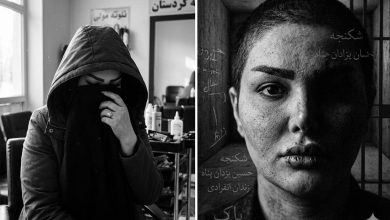

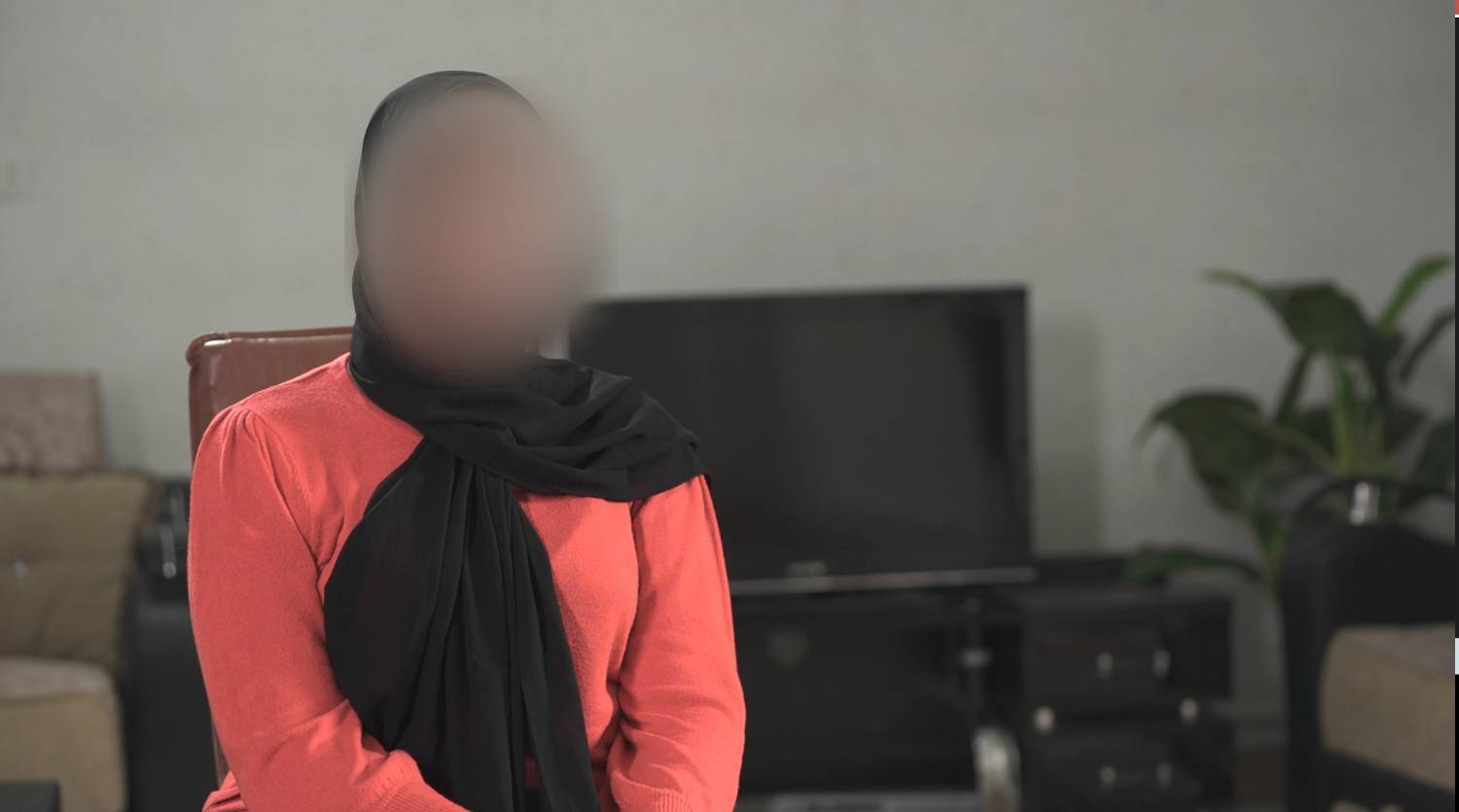
West Azerbaijan Province — Samira Soufi, 32, a hairdresser and tattoo artist, says she traveled to Erbil last year in search of better work and income. The trip was supposed to last about a month, she says, but continued for nearly six months. During that period, she says, her residency status, continued employment, and contact with the Democratic Party of Iranian Kurdistan became intertwined. Eventually, obtaining a supporter card from the party became part of her efforts to remain in Erbil—a process that, according to her account, not only failed to resolve her residency problems but was later accompanied by threats of acid attacks, pressure to marry, threats against her family, and demands for money from a man who had been a Peshmerga member of the Democratic Party of Iranian Kurdistan.
This video interview was recorded at Samira Soufi’s home in one of the cities of West Azerbaijan Province. Soufi says that before traveling to Iraq, she had no familiarity with the Democratic Party and did not go to Erbil to engage in political activity or join an armed group; her goal was to work and increase her income.
Before the trip, Soufi worked as a hairdresser in her hometown, but says she was not earning a good income. Through Instagram, she became acquainted with a woman named Fahimeh, who worked at a beauty salon in Erbil. According to Soufi, Fahimeh suggested that she travel to Erbil for work so that customers could become familiar with her skills in hairdressing and tattooing. Soufi says that after arriving in Erbil, she began working at a beauty salon owned by a woman named Frank. She worked at the salon during the day and went to Fahimeh’s home at night.
The trip was supposed to be short, but after about a month, the issue of residency arose. Soufi says she was told that she needed residency in order to continue working. She applied for residency, but, according to her account, Asayish authorities in the Kurdistan Region of Iraq, after reviewing her passport, told her that because she had entered Iraq through a legal route, they could not issue her residency. She was also reportedly told that if she wanted to obtain residency, she would have to have entered Iraq from Iran illegally or join the Peshmerga forces.
Soufi says that at the time she was neither a Peshmerga member nor intending to enter Iraq illegally. Nevertheless, she found herself in a situation in which she was seeking a way to resolve her residency status so that she could remain and continue working.
At this point, according to Soufi, Frank and Fahimeh introduced her to the Democratic Party and insisted that she obtain a supporter card from the party. She says that initially she did not even know what the card was: “I didn’t know what that card was either.”
Soufi went to one of the party’s bases. There, she says, she was told that they needed to investigate her background and the reason for her presence in Iraq. About a month later, she was contacted and asked to collect her supporter card. Soufi says the people she worked with at the salon wanted her to remain in Erbil and, because of her professional skills, introduced her to the party.
Soufi’s account suggests that her connection with the party did not begin through political activity, but rather developed under circumstances in which her employment and ability to remain in Erbil had become dependent on her residency status. She says the people she worked with insisted that she obtain a supporter card, and she pursued this route at a time when she had only recently arrived in Iraq and did not have enough money to cover the costs of residency.
But the supporter card did not secure residency for her.
Soufi says that after receiving the card, she went to Asayish with her passport. According to her, after reviewing her documents, officials stated that her entry into Iraq had been legal and that the party’s supporter card could not serve as a basis for issuing residency. She says she was told that she either had to have entered Iraq through an illegal route or become an official Peshmerga member of the Democratic Party of Iranian Kurdistan.
Soufi says that at the time, remaining in Iraq without residency was subject to a fine of approximately 40 million tomans per month, an amount she could not afford to pay. As a result, she remained in Iraq for additional months, and the debt resulting from these costs increased.
This part of Soufi’s account raises an important question: How did a woman who, according to her own account, had entered Erbil for work and had no previous background or familiarity with the Democratic Party end up in a situation where she was directed toward obtaining a supporter card from an armed group in order to continue working, while that same card could not provide her with legal residency status?
Soufi’s account also appears to suggest that, at least in her case, the existing procedures in the Kurdistan Region did not provide a clear route for continuing her stay or returning legally, leaving her between two options: remaining without legal residency and bearing substantial costs, or returning while facing risks that, according to her, people around her in Iraq repeatedly warned her about.
Even when she attempted to return through a legal route, Soufi says, Asayish officials did not allow her to cross legally, and she ultimately had to return to Iran through an unofficial route.
Based on Soufi’s account, another question arises as to whether such procedures could, in practice, push Iranians who travel to the Kurdistan Region of Iraq for work and life toward using illegal routes to enter or leave the region. This report does not have official documents or a response from Kurdistan Region authorities and therefore cannot establish that an organized policy exists. However, the experience described by Soufi warrants a clear explanation from regional authorities regarding residency criteria, the status of people who have entered legally, and the reasons for preventing them from returning through legal channels.
At the same time, Soufi’s account of how she was introduced to the Democratic Party raises another question. She says that the women she had met through her workplace, Fahimeh and Frank, introduced her to the party and insisted that she obtain a supporter card. According to her account, this introduction took place when she was facing residency problems that threatened her ability to continue working and remain in Erbil.
From this perspective, Soufi’s experience may raise the possibility that workplaces and everyday social relationships can, in some cases, become channels through which Iranian young people and women are brought closer to the political and armed structures of Kurdish armed parties. However, whether this process in the case of Fahimeh and Frank was a personal initiative or part of an organized mechanism for recruiting individuals remains unclear.
Fear of returning was another important part of Soufi’s account. She says that after obtaining the supporter card, she told her father that she could no longer return to Iran because she believed she might be arrested, imprisoned, or even executed. According to her, people with whom she was in contact in Iraq repeatedly spoke to her about the fate of those who had returned to Iran and even mentioned individuals who had died by suicide after being released from prison in Iran.
Her father, however, encouraged her to return and told her that he would handle all the necessary arrangements.
After nearly six months, Soufi decided to return to Iran. She says she intended to enter Iran through an official route, but Asayish officials did not allow her to cross legally. Eventually, she entered Iran through an unofficial route from the Doleto area.
Her account of her encounter with Iranian authorities differed from the picture of returning to Iran that had previously been presented to her in Iraq. Soufi says the officers at the checkpoint treated her respectfully. According to her, she remained there until the evening and was not mistreated. She says the officers even told her: “Don’t be afraid. You are our sister too. You have returned to your homeland.”
She subsequently returned home. Soufi says that, contrary to the warnings she had heard in Iraq, she did not face violent treatment in Iran, and her family did not treat her badly either.
But returning to Iran did not bring an end to the pressure she had experienced.
Soufi says that while she was in Erbil, a man who was a Peshmerga member of the Democratic Party had approached her. The man accused her of having come from Iran to spy. He questioned how she had managed to obtain a supporter card without becoming a Peshmerga member while continuing to work at a beauty salon.
At the same time, the man wanted her to marry him.
Soufi says that when she rejected the proposal, the threats began. One of the threats she recounts was: “If you go outside, I’ll throw acid in your face.”
She says that for about three months she lived with nighttime calls, insults, humiliating accusations, and fear while traveling between her home and the beauty salon. Samira says the pressure became so severe that she was afraid to go outside and worried that the man might personally attack her or send someone else to carry out the threat of an acid attack.
At this stage of the account, the issue goes beyond a personal dispute. A woman who had traveled to Erbil for work was, according to her account, subjected to pressure to marry and threats of physical harm—threats she says came from an individual who was a member or Peshmerga of the Democratic Party.
According to Soufi, the harassment continued after she returned to Iran. The man contacted her through Instagram and sent messages to her sisters and other family members. Soufi says he threatened her family, telling them that if she did not marry him and return to Iran, he would throw a grenade at their home and kill everyone.
Soufi says she also raised the issue of these threats with Iranian authorities.
She also says the man demanded 40 million tomans from her, and that she paid the amount so that he would leave her alone. According to Soufi, the harassment stopped after she paid the money, and she has not received any further contact from him for approximately five or six months.
Nevertheless, Soufi says the effects of that period remain in her daily life. She says she has difficulty sleeping and that when she goes to the market or leaves the house, her father or brother usually accompanies her: “I can’t go outside alone.”
In another part of the interview, Soufi speaks about her personal life. She says she married at the age of 14, while she was still in school, and lived with her husband for about six years. She has one child from that marriage and says that after the separation, family disputes and problems with her former husband have made it difficult for her to see her child.
This part of her life shows that vulnerability and limitations on personal choices had already been part of her experience before her trip to Iraq. What happened in Erbil, however, added another layer to that vulnerability: dependence on residency status for employment, being directed toward obtaining a supporter card from an armed group, fear of returning, and subsequently facing threats and pressure from a man she identifies as being affiliated with the same party.
Ultimately, Samira Soufi’s account is more than a story about a supporter card. It is the story of a woman who left her hometown in search of work and better income but, according to her testimony, found herself in circumstances where employment, residency, contact with an armed group, and fear of returning to Iran became intertwined. Along this path, the supporter card that, according to her, was supposed to provide a way to remain and continue working neither resolved her residency problem nor provided her with security; instead, she says, it later became one of the factors underlying suspicion and pressure against her.
This report documents the personal experience and testimony of Samira Soufi. Nevertheless, details of her account—particularly regarding how individuals are introduced to the party, the role of workplaces in facilitating such contacts, residency procedures, and the subsequent pressure she describes—raise serious questions about the support, recruitment, and responsibility of armed groups toward people who enter into contact with them.
The video and audio recordings of this interview are archived by Iranian Kurdistan Human Rights Watch and, if necessary, can be made available confidentially upon formal request to lawyers, writers, documentary filmmakers, and human-rights activists.