
Author: Mehdi Maleki
While the military tension between the US, Israel, and Iran is predominantly analyzed through the lens of security and geopolitical calculations, the humanitarian consequences of this conflict—particularly for children—have received far less attention. From threats to the right to life and education to deep-seated psychological trauma, displacement, and the collapse of family life, children remain the first silent victims of any crisis; a reality that raises profound questions under International Humanitarian Law (IHL).
Wars are typically described using terms like security, deterrence, and the balance of power. Yet, on the actual battlefield, it is children who pay the heaviest price of the conflict more than any other group. In any armed conflict, even when military and political objectives take center stage, the human cost of war routinely falls upon the lives of children who play absolutely no role in political decision-making. During the recent US and Israeli attacks against Iran, the plight of children is not merely a marginal humanitarian concern, but a core component of the legal and humanitarian evaluation of this conflict.
According to the established tenets of international humanitarian law, children are classified as civilians entitled to special protection. Nonetheless, the experience of contemporary warfare has demonstrated that urban areas, schools, healthcare centers, and public infrastructure are practically turned into extensions of the battlefield. Under such conditions, children’s right to life and safety is the very first right to face a direct, immediate threat. Missile strikes, the bombardment of residential zones, and the destruction of civilian infrastructure transform a child’s living environment from a space of growth and education into one saturated with fear, instability, and mortal peril.
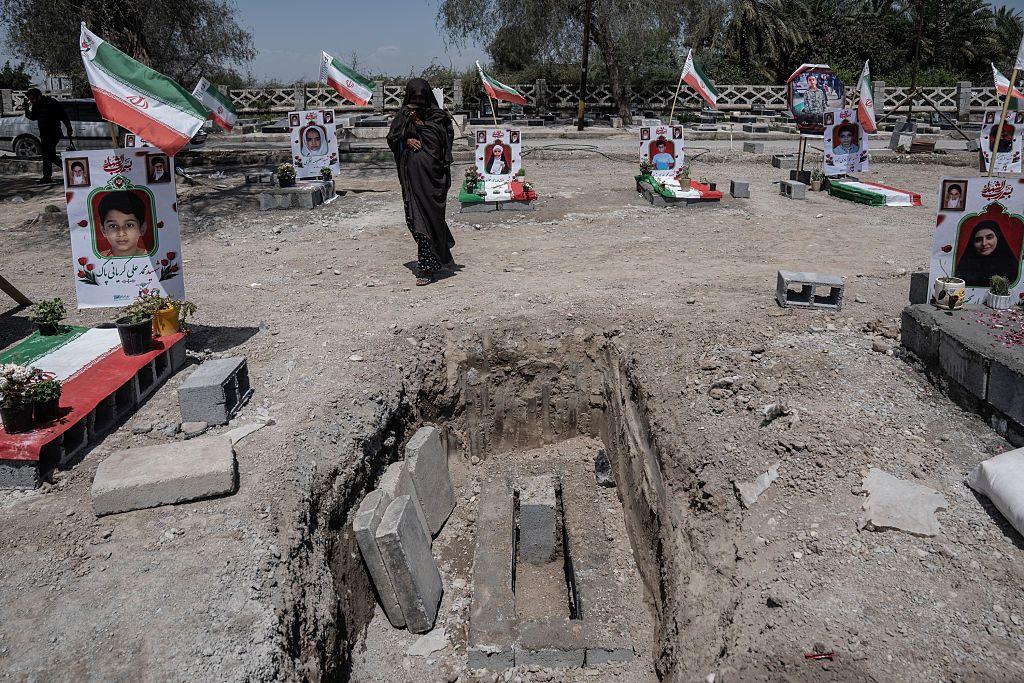
In the opening days of the conflict, the attack on the “Shajareh Tayyebah” school in Minab stood out as one of the most tragic examples of civilian casualties. According to published reports, this strike claimed the lives of numerous students, once again underscoring the critical issue of the safety of educational facilities during wartime. Setting aside the conflicting political narratives of the warring parties, the targeting or harming of children within educational environments provokes grave legal and humanitarian questions—questions that have been repeatedly raised in many contemporary conflicts, from Gaza to Ukraine.
The damage inflicted on children by war is by no means limited to direct physical casualties. Children exposed to explosions, debris, or scenes of extreme violence often struggle with long-term psychological trauma. Chronic anxiety, severe sleep disturbances, persistent fear, and behavioral disorders represent a fraction of the reality documented extensively by international organizations regarding war-affected children. These psychological scars typically endure long after military operations have ceased, deeply altering the social and psychological development of future generations.
War also severely disrupts one of the most fundamental rights of children: the right to education. In conflict zones, schools are either physically destroyed or shut down due to pervasive insecurity; occasionally, they are even repurposed for military or emergency relief functions. In many instances, parents keep their children away from classrooms out of a justifiable dread of incoming strikes. The consequence of this gridlock is the emergence of a generation that is not only deprived of continuous learning but also bears a widening educational and social chasm. The history of protracted conflicts in the Middle East shows that interruptions in schooling are never a temporary crisis; they can structurally limit children’s economic and social opportunities for decades.
Parallel to education, the healthcare system is usually pushed to its breaking point during wartime. Wounded children require immediate access to medical treatment, but in a war zone, hospitals and emergency centers themselves suffer from critical supply shortages, ruined infrastructure, and broken pharmaceutical supply chains. For children suffering from chronic illnesses, this breakdown poses a direct threat to survival. Concurrently, the scarcity of clean water, disrupted sanitation services, and reduced food security multiply the risks of malnutrition and the outbreak of infectious diseases—a trajectory where children consistently comprise the primary victims.
Another devastating byproduct of war is the widespread displacement of families. Millions of children lose their homes, schools, and social circles during hostilities, forcing them into perilous migration tracks. Throughout this frantic process, the danger of parental separation or becoming orphaned increases exponentially. For a child, the experience of displacement is far more than a change in geographical coordinates; it is the total loss of a sense of security, belonging, and psychological stability. Families enduring the compounding pressures of war, poverty, and displacement are systematically left with diminished capacity to provide the emotional and economic buffer their children desperately need.
From a legal standpoint, the protection of children during armed conflicts is one of the most immutable principles of international law. The Convention on the Rights of the Child and the rules of international humanitarian law strictly obligate all parties to a conflict to differentiate between military objectives and civilians, and to refrain from attacking vital civilian hubs such as schools and hospitals. Furthermore, the Principle of Proportionality mandates that even when a legitimate military target exists, any attack that inflicts excessive or widespread civilian casualties can be deemed a flagrant violation of international law.
Viewed through this lens, the recent conflict involving the US, Israel, and Iran cannot be dismissed merely as a geopolitical chess game. Its humanitarian fallout, specifically regarding children, remains an inseparable matrix in the evaluation of this war. As the scope of the conflict widens, the probability of deeply scarring the youngest generation scales up—a generation destined to carry the heavy psychological and physical shrapnel of this war not just today, but for decades to come.
Ultimately, the issue of children in war is neither a sentimental nor a purely moral topic; it is the definitive yardstick used to measure the warring parties’ compliance with humanitarian and legal parameters. The history of modern warfare proves that reconstructing physical infrastructure can be accomplished within a finite timeframe, but healing the psyches and salvaging the futures of children who lived through the horror of war requires generations of dedicated effort. Protecting children, in practice, means safeguarding the very future of societies and maintaining the bare minimum boundaries of human decency amidst the absolute violence of war.