
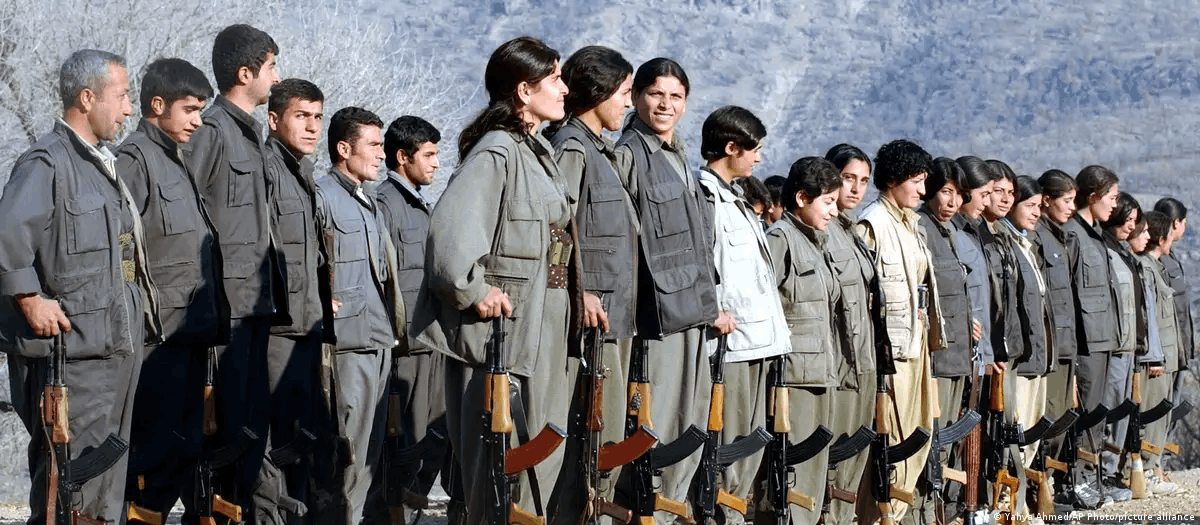
Donald Trump’s statements regarding the arming of Kurdish groups through actors based in the Kurdistan Region of Iraq have once again turned the issue of foreign support for non-state armed groups into one of the most controversial topics in international law. If such an action has been pursued as an operational policy, it can be legally evaluated as an intervention in the internal affairs of a sovereign state.
The principle of non-intervention is one of the foundational rules of the legal order between states. According to this principle, no state is permitted to intervene in the political or security structure of another state through military or paramilitary means.
The International Court of Justice (ICJ), in the 1986 case of Nicaragua v. United States, explicitly stated that providing arms and training to opposition armed groups can constitute unlawful intervention in a country’s internal affairs. Within this framework, arming antagonistic groups with the aim of influencing Iran’s political structure is not merely a political move, but a matter to be examined under the violation of international law. Furthermore, using the territory of a third country for such actions can be raised as a violation of sovereignty, entailing responsibilities for the host government.
Arming non-state armed groups has always been accompanied by serious human rights concerns. These groups often operate outside legal accountability frameworks, which increases the risk of violating the fundamental rights of individuals. Past experiences have shown that transferring weapons to such groups can lead to increased violence in civilian areas, the undermining of public security, and the violation of basic rights such as the right to life and personal security.
Under the principles of State Responsibility, every state is obliged to prevent the use of its territory for harmful acts against other countries. If the activities of armed groups are organized from a country’s soil against another, this can create legal responsibility for the host government, even in circumstances where full control over all regions is not present. Regarding the Kurdistan Region of Iraq, the question arises: what mechanisms exist to monitor the activities of these groups?
In the field of International Criminal Law, supporting groups that may commit serious violations can, under specific conditions, be examined as “complicity in crime.” Of course, establishing such responsibility requires proving specific elements, including knowledge and intent. However, raising these questions shows that the legal dimensions of such actions go far beyond the level of bilateral political relations.
Introducing the issue of arming in a sensitive area like the Kurdistan Region carries multi-layered consequences for regional stability and human rights. This issue serves as a reminder of the necessity to return to fundamental principles such as non-intervention and respect for national sovereignty. Ultimately, any policy that leads to the empowerment of armed actors outside official frameworks must be evaluated considering its long-term impact on civilian security.