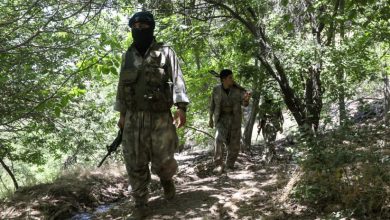

Interviews with eyewitnesses who have emerged from militant groups offer more than just personal stories; they provide a critical window into the internal mechanics, behavioral patterns, and human tolls of these organizations.
In human rights documentation, these accounts serve as essential field data.
They help identify systemic violations of fundamental rights—including individual liberty, family contact, the prohibition of forced labor, and the right to physical and psychological security.
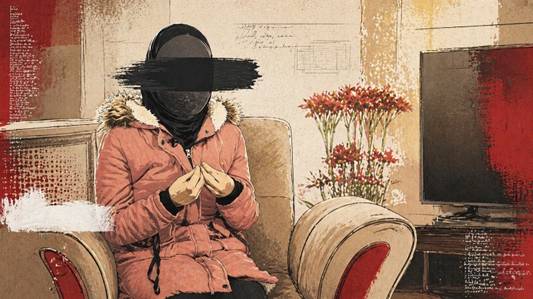
This report is based on an interview by a human rights expert from the Watchdog with “Soheila R.,” a young woman who spent two years within one of these groups before cutting ties.
Her story begins with simple curiosity and ends in a condition she describes as “living in near-captivity.”
To protect her privacy and adhere to ethical standards, her name has been changed.
— Please introduce yourself.
My name is Soheila. I am 21 years old, from Mahabad, and I hold a high school diploma in experimental sciences. In 2019, at the age of 18, I joined the Democratic Party of Iranian Kurdistan (KDPI).
— How did you first encounter this group?
Through Instagram. I had no prior knowledge of them. I just kept seeing these highly idealized, attractive videos. Those images sparked my curiosity. I eventually messaged one of the accounts, and from there, someone gave me instructions on how to leave the country.
— How informed was your decision?
To be honest, it was driven by curiosity rather than a conscious, informed choice. Social media portrays a reality that is far more beautiful than the truth. I was simply captivated by that imagery.
— What was the gap between your expectations and the reality you found after joining?
Almost everything was different. It looked nothing like the pictures. The explanations they gave felt like empty slogans rather than a clear or meaningful path.
— What were the initial training phases like?
We had about 50 days of training, covering both politics and military tactics. Simultaneously, we were required to handle guard duties, cooking, and various service tasks. From the start, it was never clear what our specific roles were supposed to be.
— Could you elaborate on the military training?
We learned to handle various weapons. The paradox was that they told us this training was for “defense,” yet we were never in a position where that concept felt real or tangible to us.
— Were you aware of their active operations?
We knew units were being sent into Iran for operations, but the details remained hidden. Public announcements only happened if an operation was deemed “successful.” Over time, this secrecy became a major point of contention for me.
— What was the status of women within the organization?
On the surface, they talked about equality. In practice, the pressure on women was far greater. We had to juggle multiple roles—soldier, servant, and laborer—all without any real power to choose.
— What about personal freedoms?
There were essentially none. No contact with family, no internet, and no freedom of movement. Everything was monitored. Even the simplest daily decisions required a commander’s permission.
— How would you describe that situation?
It felt more like captivity than a choice.
— What finally pushed you to leave?
The lack of a future. There was no horizon—no growth, no choices. Just an exhausting, repetitive cycle.
— Were you afraid of returning home?
Terrified. They had told us we would face severe consequences. But when I actually returned, none of the things they threatened me with happened.
— If you could summarize your experience in one sentence?
A simple curiosity can lead you down a path where getting out feels like escaping an endless cycle.