
The foundational principles of International Humanitarian Law (IHL), including distinction, proportionality, and precaution, obligate all parties to a conflict without exception to protect civilians. Any allegations violating these rules require independent, impartial, and documented investigations.
Amid growing debates over the legitimacy of military operations against Iran and the passage of bills in the US Congress to limit the president’s war powers, legal institutions and human rights advocates are increasingly focusing on the execution of military operations and the compliance of conflicting parties with IHL—rules that maintain civilian protection as a binding obligation even in the heat of war.
Recent developments once again highlight that evaluating a conflict is not solely restricted to the legitimacy of its initiation (jus ad bellum). Under international humanitarian law (jus in bello), even if disagreements exist regarding the legal or political grounds for starting a war, all conflicting parties remain strictly bound to observe rules safeguarding civilians and civilian objects.
These rules, developed across the Geneva Conventions, their Additional Protocols, and customary international law, rest upon three fundamental pillars: distinction between military and civilian objectives, proportionality in the use of force, and taking all feasible precautions to minimize civilian harm. Accordingly, deliberately targeting civilians or civilian infrastructure, as well as launching attacks where expected incidental civilian loss is excessive in relation to the anticipated concrete military advantage, can trigger international accountability and, under certain conditions, individual criminal responsibility.
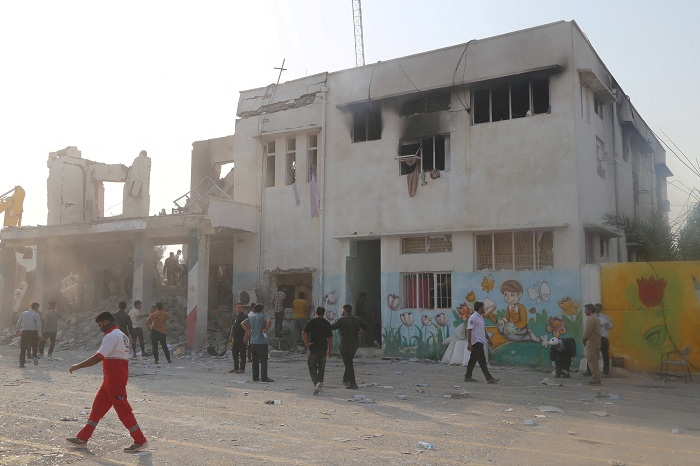
Recent months have seen numerous reports and allegations concerning civilian casualties and damage to infrastructure during attacks attributed to the United States and Israel within Iran. These reports indicate the death and injury of ordinary citizens and damage to educational facilities, healthcare centers, and residential areas. Nevertheless, definitively establishing legal accountability for each event requires independent, impartial, and evidence-based technical investigations.
Among the highlighted cases, an attack on an educational facility in Minab and reported strikes in Lamerd have drawn the attention of the media and human rights observers. Regarding these incidents, claims of civilian fatalities and damage to civilian infrastructure have surfaced, with some public reports pointing to the potential use of US-attributed weaponry. However, the definitive attribution of responsibility to any state or military force requires a comprehensive review of documentation, imagery, munitions fragments, satellite data, and other reliable evidence.
Pursuant to Article 8 of the Rome Statute of the International Criminal Court (ICC), intentional attacks against civilian populations, targeting educational or healthcare institutions protected under humanitarian law, executing disproportionate strikes, and extensive destruction of civilian property not justified by military necessity can constitute war crimes under specified conditions. Still, substantiating these charges demands proving the legal and factual elements of each case within credible investigative frameworks and a fair trial.
Concurrently, a group of international law professors and scholars in the United States have issued statements warning about the legal and humanitarian ramifications of military operations against Iran, stressing the necessity of full compliance with the UN Charter and international humanitarian law. These stances reflect profound anxieties within segments of the legal community regarding civilian protection and the legal thresholds for the use of force.
Conversely, the legislative initiatives in the US Congress to curb the president’s war powers signify domestic debates and disagreements concerning the entry or continuation of military conflict. However, such legislative measures do not, in themselves, constitute evidence or proof of war crimes and must not replace independent legal and judicial processes.
Should serious violations of peremptory norms (jus cogens) of international humanitarian law be proven, states could face state responsibility, including the obligation to conduct effective investigations, provide reparations, and implement measures to prevent recurrence. Furthermore, in certain legal systems, the principle of universal jurisdiction enables the prosecution of alleged perpetrators of international crimes regardless of where the crime occurred or the nationality of the accused.
Nevertheless, the fundamental principle of due process dictates that any attribution of criminal or international responsibility must rely on professional, independent, and evidence-backed inquiries, rather than media assertions or political posturing by conflicting parties. The history of armed conflicts globally demonstrates that truth is often the first casualty of war, and reconstructing an accurate narrative requires specialized, impartial scrutiny.
Ultimately, international humanitarian law is anchored in the universal protection of civilian lives and human dignity. The legal and human value of an individual’s life must never be measured by their nationality, religion, ethnicity, or place of residence. Uniform adherence to this principle, irrespective of the perpetrators’ or victims’ identities, remains an indispensable condition for preserving the credibility of the international human rights framework and preventing impunity for grave breaches of humanitarian law.