
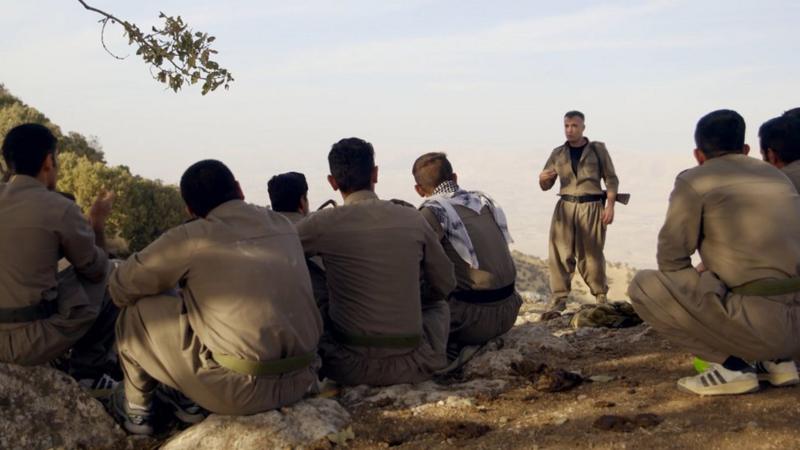
What must be considered today regarding Iranian Kurdish militant groups in the Kurdistan Region of Iraq more than any other issue is not regional political and security rivalries, but rather the humanitarian condition of the members who have been trapped within the structure of these groups for years; individuals, many of whom now live in difficult, unstable conditions lacking the basic minimums of human life.
An exclusive interview by the Iranian Kurdistan Human Rights Watch (IKHRW) with an Iraqi Kurdish journalist—who wished to remain anonymous—presents a worrying picture of the situation of these individuals; forces who, according to him, have practically been left to their own devices following recent regional developments and increased pressure on Iranian Kurdish armed groups.
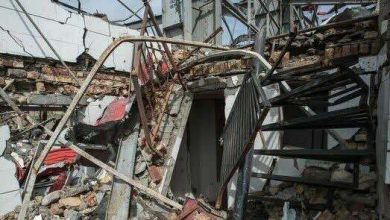
This journalist states that a major portion of these groups’ bases has been destroyed in recent military attacks, forcing rank-and-file members to constantly relocate across mountains and desert areas around the cities of the Kurdistan Region of Iraq. According to him, many of these individuals live in conditions where they lack regular access to medical facilities, a permanent settlement, proper nutrition, and even psychological security.
He emphasizes that extreme heat, the outbreak of certain diseases, mental erosion caused by displacement and uncertainty, and the lack of a clear outlook have made the situation extremely difficult and exhausting for the ordinary members of these groups.
According to this report, a significant portion of the forces present in these groups consists not of senior leaders and commanders, but of youth who have been recruited over the past years through promises such as migration, a better life, employment, or financial income. Some accounts from eyewitnesses and defectors indicate that in certain cases, recruitment was conducted not based on free political choice, but through deception, concealment, and the exploitation of individuals’ socioeconomic status.
This issue becomes even more concerning given that simultaneously, numerous reports have been raised regarding human rights violations within these groups; including violence against women, restriction of personal freedoms, imprisonment of members, torture, deprivation of free communication with family, enforced disappearance, and even the use of child soldiers in military environments.
Under such circumstances, many ordinary members have practically been placed in a position where they have no easy way back, lack sufficient security in their settlements, and the leaders of these groups refuse to assume responsibility for their humanitarian situation.
The Iraqi Kurdish journalist, in his conversation with the Iranian Kurdistan Human Rights Watch, states that social pressure in the Kurdistan Region of Iraq against the presence of these groups has increased. According to him, as soon as residents of certain areas become aware of the presence of forces from these groups, they approach the Kurdistan Region Police (Asayish) to demand their expulsion.
He also mentions that officials of the Kurdistan Region of Iraq have notified these groups that no military actions against Iran should be conducted from KRI territory, and at the same time, they must plan for a gradual departure from the Kurdistan Region of Iraq.
According to this source, these very pressures have led to increased dissatisfaction, internal protest, and even the defection of some forces; forces who now, more than ever, consider themselves victims of the political and military decisions of the group leaders.
Meanwhile, one of the most important human rights questions is why the senior leaders and commanders of these groups—some of whom live in European countries or the United States—are in secure conditions, while ordinary members are left exposed to displacement, illness, insecurity, and even death?
The field report by the Iranian Kurdistan Human Rights Watch indicates that the gap between the rank-and-file and the leadership of these groups has visibly widened. Many low-ranking forces now neither see a clear political vision ahead of them nor feel that the existing organizational structures guarantee their security and human dignity.
Accordingly, the issue of these individuals should not be viewed solely through a security lens. A significant portion of the members present in these groups can be considered victims of a cycle of deception, organizational violence, political exploitation, and the continuous violation of human rights; individuals who require urgent humanitarian, legal, and psychological support.
The Iranian Kurdistan Human Rights Watch believes that Iran, Iraq, and the Kurdistan Regional Government (KRG) must, in cooperation with international bodies, establish urgent mechanisms for the rescue, rehabilitation, and support of the vulnerable members of these groups. Providing the possibility of a safe return, access to medical and psychotherapeutic services, free communication with families, and legal support for defectors are among the measures that must be prioritized.
Furthermore, the formation of independent fact-finding committees to investigate allegations regarding torture, enforced disappearance, violence against women, the use of children in military environments, and other human rights violations within these groups is an undeniable necessity.
The prosecution of leaders and commanders who, if proven guilty, played a role in systematic human rights violations must not fall victim to political and security considerations. Justice for the victims requires moving past instrumental and political perspectives on the issue of armed groups.
Today, perhaps the most critical reality concerning these groups is not their political claims, but the fate of the human beings trapped for years inside closed and armed structures; individuals, many of whom are now victims rather than “forces.”