
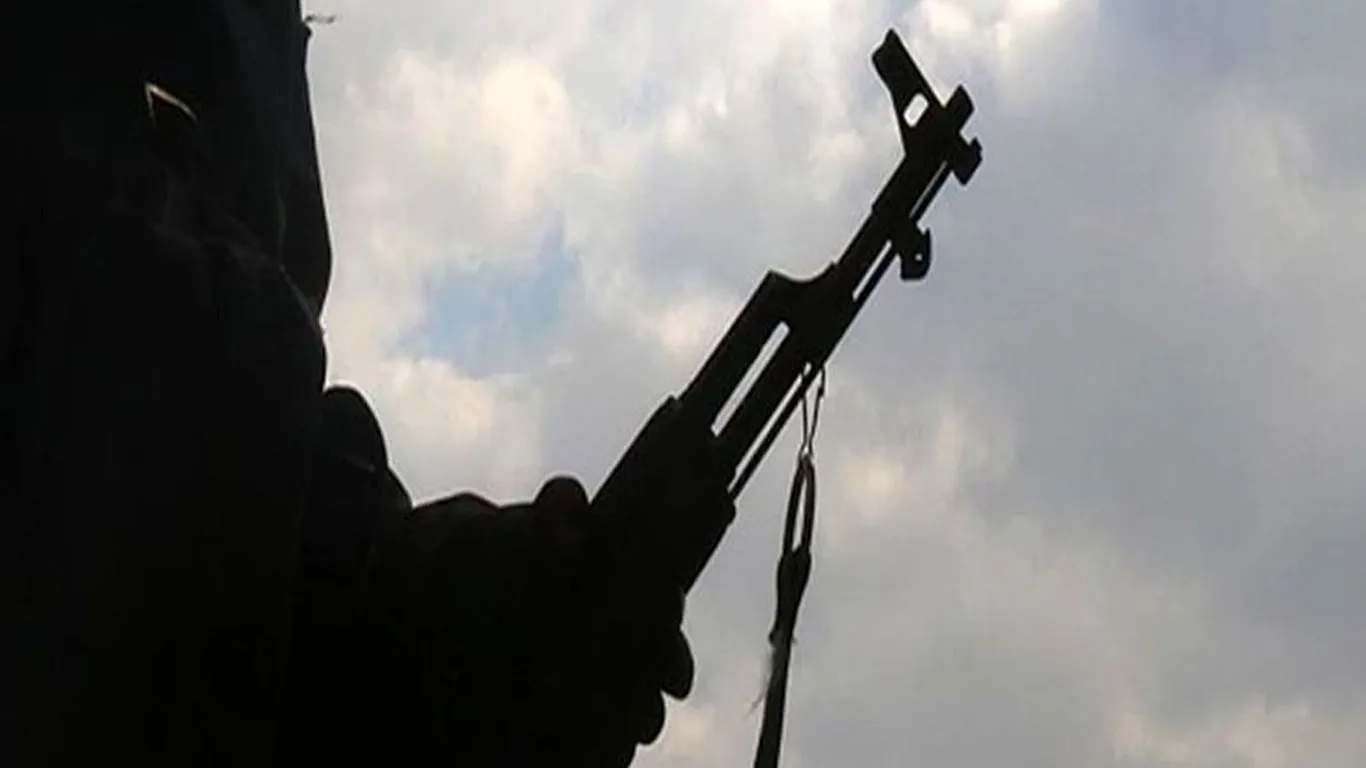
The following interview was conducted in person over the course of 35 minutes. Throughout the interview, this young man repeatedly experienced severe tension and anxiety, urgently pleading that his identity not be revealed under any circumstances. He emphasized multiple times his profound fear of being tracked down and targeted by PJAK members, asking for his name, personal details, and any identifying information to remain strictly confidential. Consequently, pseudonyms have been used in this report, and all details capable of exposing his identity have been systematically omitted. What follows is the direct account of this young man’s years spent inside the Democratic Party of Iranian Kurdistan (KDPI) and subsequently PJAK.
Introduce yourself and tell us how you ended up entering these groups. I was a drug user back in Iran. I used methamphetamine (Shisheh) and pills, and for a period, I was homeless and sleeping on the streets. I truly had no one; I only had a very elderly mother, and my living conditions were extremely difficult. I went there solely with the hope of quitting my addiction. I was a homeless addict in Bukan, living a miserable life. An acquaintance told me that if I joined the Democratic Party (KDPI), I would become a Peshmerga, and from there, I could easily go to Europe and find a job. I believed his words and left. But when I arrived, I realized none of those promises were real.
What did you do while you were in the Democratic Party? There wasn’t much to do. We pulled guard duty, worked, and slept. Life was utterly hollow. The only thing we had was food—and just enough of it so we wouldn’t die of hunger. If I hadn’t been using drugs or if I had a family to prevent me from falling into that state, I would have never ended up there. Like any other young person, I wanted to live alongside my family.
Why did you defect from the Democratic Party? One of the main reasons was the things I witnessed there. There were severe instances of sexual abuse targeting some of the recruits. For example, if a young boy had an attractive face, commanders or older members would target him. I personally witnessed cases where many of these boys were subjected to sexual harassment or rape. This was also a common, deeply rooted ordeal for the girls. I was very young at the time, and bearing witness to these issues was incredibly difficult for me. Another issue was the heavy nepotism; if someone had a family background within the organization, they would easily ascend to a command position, and the rest of us had to work under them. We did grueling physical labor—shoveling, pickaxing, and working as basic manual laborers.
What happened after your time with the Democratic Party? After a while, I split from the Democratic Party, returned to Iran, and started working as a Kolbar (cross-border cargo carrier). It was during that time that I entered PJAK. I was a Kolbar back then. During one of my trips in Iraq, recruiters approached me and said that if I joined PJAK, I could go to Germany and Europe. Being young and naive, I believed these words. I am still young now; I have just turned twenty. But when I went there, I realized everything was completely different. There was no mention of Europe, nor of the future they had promised. There was only backbreaking labor, digging mountains, grueling physical work, and coercion—everything was forced. Even if they told you to throw yourself off a mountain cliff, you had to do it. You had absolutely no means of communication with the outside world. Of course, this level of violence was natural for them. When you have zero contact with civilization, living only in isolated mountain caves and being treated like an animal, after a while, you become brutalized yourself and treat everyone else like an animal.
What were the conditions like inside PJAK? I sustained immense psychological and physical trauma there. A vast number of people were subjected to severe labor and intense psychological pressure. In the Democratic Party, despite all the problems, it was ultimately possible to leave. In PJAK, however, the situation was entirely different. If you stated that you wanted to return home, they would put you under intense interrogation and slap dangerous labels on you. I personally witnessed many people who desperately wanted to defect but lacked the courage to do so, and ultimately committed suicide. This is a dark reality that truly exists there. Many individuals ended up killing themselves due to forced confinement and because they had lost all hope of escape or return; yet the group would later officially announce that these individuals had been “martyred.” “Martyred” for what cause? Where? They had committed suicide out of sheer despair. I wanted to kill myself too. I came to the brink of suicide multiple times.
When I finally escaped, I managed to bring someone along with me—a 15-year-old boy who was on the verge of suicide. He was terrified to run. They shot and killed many people during their escape attempts and labeled them as Iranian spies. Just like that, they shot a 14 or 15-year-old child of someone from behind and killed him, simply because he wanted to go back to his mother and family.
Were children also utilized within the organization’s apparatus? I personally saw children of a very young age—some only seven or eight years old—present in heavily militarized environments. The families of some of them would come all the way to the mountains looking for them, but returning them to their families was never allowed. I swear to God, I saw a seven-year-old child who had been handed an assault rifle and was fully armed. They had turned him into a killer. What does a seven-year-old child understand about ideology? The weapon was literally larger than his own height. It always haunted me how a child at that age could ever be brought into such a brutal space.
What did you witness regarding the suicides and executions of the forces? I saw many individuals who were completely broken psychologically. Some were killed, and others reached a point where they simply could no longer endure the conditions. I myself was under severe pressure at one point and felt I could no longer go on. Many defectors were also executed. For what crime? For instance, simply because they insisted on returning home. When solitary confinement, prison, and torture failed to break their resolve and they still demanded to leave, commanders would take them to the top of the mountain and execute them. There was no trial or judicial process; whatever the commander dictated became absolute law.
How did you manage to escape? I couldn’t last there for more than two months. Every single day was filled with psychological pressure, death threats, humiliation, and abusive behavior. Ultimately, I decided to flee. During our escape, we were heavily shot at. Perhaps hundreds of bullets were fired at us. At that same time, I brought along another adolescent who was terrified to move. He had repeatedly lost all hope due to the sheer weight of the psychological torture, and I helped him get out of there. He wanted to commit suicide. I am a broken person, but perhaps God will see the rescue of that teenager and have mercy on my soul.
How do you feel today about that dark period of your life? When I look back at the past, I see that a large part of my decisions was the direct result of harsh living conditions, addiction, homelessness, and the false promises that were fed to me by recruiters. I was simply looking for a way out, but I stepped onto a path that created far greater trauma for me. I beg of you, do not let anyone recognize us. PJAK shows no mercy even to their own sisters and mothers; they will easily find us and kill us. Please, I beg you to keep this safe.
The complete audio file of this interview is securely preserved in the archives. Adhering strictly to the principles of confidentiality and protecting the identity of the interviewee, this file can be made available upon request to researchers, legal experts, human rights activists, documentarians, and other professionals working in the field of investigating the status of armed groups and the rights of victims.