
In an era when the world needs dialogue, diplomacy, and the peaceful resolution of disputes more than ever, the continuation of tension-inducing behaviors by the government of the United States of America and Donald Trump himself has raised deep concerns about the future of regional and global peace and stability.
What global public opinion is facing today is not merely a political dispute between two governments; rather, it is a test of the credibility of the fundamental principles of the international system—principles established on the basis of respect for state sovereignty, resolving disputes through negotiation, refraining from the resort to force, and protecting the rights of nations.
While Iran has once again chosen the path of negotiation and dialogue, demonstrating its will to resolve disputes through diplomatic channels, every time signs of progress appear in the negotiations, we witness the return of threatening rhetoric, pressure, and provocative actions by the US government. This blatant contradiction raises serious questions about the sincerity of an approach that speaks of negotiation on one hand, while destroying the atmosphere of trust through the language of threat and pressure on the other.
Even more concerning is that, at times, there is talk of seizing territory or exploiting the national resources of an independent country; a rhetoric that is not only incompatible with the United Nations Charter and recognized rules of international law, but also reminiscent of eras in history for which the world paid heavy prices to transcend.
Yet, beyond all political and legal debates, the primary victims of these tensions are ordinary people.
Behind every threat, every sanction, every insecurity, and every political adventure lie the lives of millions of human beings. Children growing up with anxiety about the future; mothers worried about the safety and peace of their families; the elderly spending the final years of their lives under the shadow of worry and uncertainty. The psychological trauma resulting from the continuous threat of war and instability does not vanish with the end of a crisis; these wounds sometimes persist for years and even generations, impacting the social, psychological, and economic health of societies.
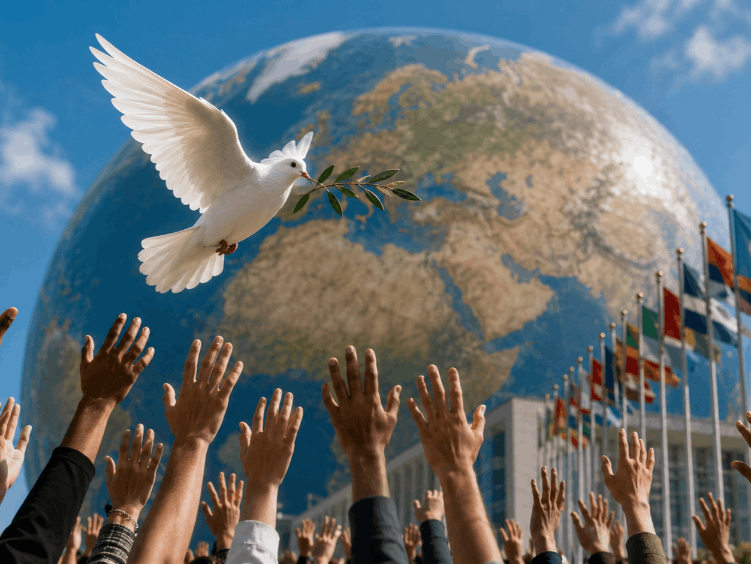
The international community must not remain indifferent to this human reality. The defense of peace only becomes meaningful when all nations, without discrimination, enjoy the right to security, tranquility, and a life free from threats.
Therefore, a historic responsibility rests today upon the shoulders of governments, parliaments, international organizations, civil societies, academics, intellectuals, and peace activists worldwide. Silence in the face of policies that lead to the escalation of crises and instability cannot aid the establishment of peace. The world requires a moral and human consensus to support diplomacy, oppose threats, and prevent the expansion of tensions.
At the same time, the history of Iran bears witness to a clear truth. Throughout the centuries, the Iranian nation has repeatedly faced aggression, pressure, and crises, yet it has never lost its identity, culture, and will. Iran is a land that has passed through the heart of the most difficult historical trials, managing to leave behind invaders and crises while preserving its culture, civilization, and human heritage.
Iranians are a peace-loving people, but being peace-loving has never meant surrendering to bullying. This nation has always welcomed dialogue, while simultaneously defending its independence, dignity, and legitimate rights.
Today, the message of the Iranian people to the world is clear: We desire peace, security, and cooperation; but a peace based on mutual respect, justice, and adherence to the rights of nations. The international community must not allow the language of threat to replace the language of diplomacy, nor permit short-term political interests to jeopardize the future of global peace and stability.
Defending the people of Iran is not merely defending a single nation; it is defending the principle of peace, human dignity, and the rule of law within the international system.