
Dr. Amir Hasanvand, a legal scholar
Recent news regarding the prosecution of several leaders and members of armed Kurdish groups, along with the utilization of international judicial and police cooperation mechanisms, has once again brought an old yet fundamental debate before public opinion: Can holding titles such as “political activist,” “opposition member,” “political refugee,” or “leader of a political-military organization” obstruct judicial proceedings into allegations of murder, bombings, kidnapping, armed assault, torture, enforced disappearances, or other serious crimes?
The answer from both domestic and international criminal law is clear: No.
No political title, no history of struggle, no refugee status, and no organizational affiliation automatically grants criminal immunity. Members and leaders of political and armed organizations cannot evade accountability for specific actions attributed to them simply by labeling judicial files as “political.”
Law only truly matters when it distances itself from extreme interpretations. Armed and political organizations cannot weaponize human rights rhetoric to escape accountability regarding their victims and violent acts. The foundational principle here is individual criminal responsibility.
In contemporary criminal law, individuals are not convicted based on their political beliefs, ethnicity, party membership, or organizational affiliation; rather, criminal liability must be proven based on specific behavior, evaluable evidence, and the personal attribution of the crime.
Conversely, membership in a political party, organization, or armed movement cannot block investigations into an individual’s potential involvement in murder, planning or executing armed operations, ordering crimes, aiding and abetting, providing resources for criminal acts, or any other forms of criminal liability.
The Rome Statute of the International Criminal Court (ICC) also underscores the criminal responsibility of natural persons. According to Article 25 of the Rome Statute, direct commission is not the only form of criminal liability; ordering, inducing, aiding, abetting, or otherwise assisting in the commission of a crime by a group acting with a common purpose can also form the basis of criminal responsibility. Furthermore, Article 28 establishes the command responsibility of superiors for crimes committed by forces under their effective command and control.
Pointed out these principles does not mean pronouncing anyone guilty in advance. The presumption of innocence, the right to legal counsel, access to evidence, the right to challenge court jurisdiction, and the right to a fair trial must be respected for all suspects. However, the presumption of innocence is fundamentally different from immunity from accountability. A suspect has the right to deny charges, but a media denial is no substitute for a judicial response to victims’ complaints, independent evidence review, and formal proceedings.
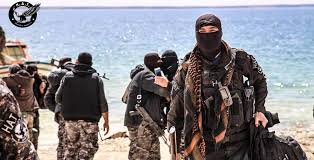
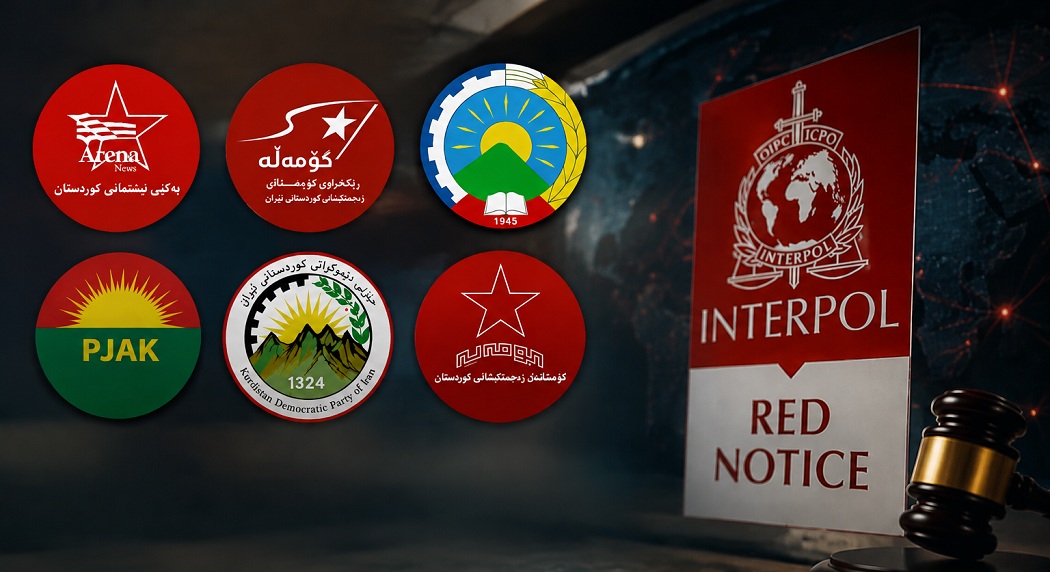
In recent weeks, some individuals affiliated with armed Kurdish groups such as PJAK, Komala, Democrat, and PAK, in response to reports of prosecution and the activation of international mechanisms, have denied the substance of these cases or the legitimacy of the judicial actions. Such reactions possess no independent evidentiary value until they are accompanied by documented counter-arguments, evidence review, and participation in a formal judicial process.
In a criminal justice system, cases are not settled in the media. If a claim is false, there is a legal path to counter it. If there is insufficient evidence, defense lawyers can challenge its validity. If the requesting state’s judicial system lacks the necessary guarantees for a fair trial, or if the suspects claim a risk of inhumane treatment, the principle of non-refoulement and states’ human rights obligations can block extradition. However, none of these safeguards mean erasing the rights of the victims.
One of the fundamental flaws in some political narratives surrounding these cases is the complete disappearance of the victims from the discourse. Debates rapidly shift to the Islamic Republic, Interpol, Article 3 of the Interpol Constitution, political asylum, the legitimacy of the Iranian judiciary, and interstate relations. Yet, rarely does anyone ask: What is the status of the families who claim their loved ones were killed in armed operations, kidnapped, subjected to enforced disappearance, or harmed by actions attributed to members of armed groups? Do they not have the right to seek justice?
Can the mere political affiliation of suspects with an opposition movement invalidate the complaints of victims? Is criminal justice only valid when states are the accused, but when complaints are directed at members or leaders of armed organizations, everything must be dismissed as a “political setup”? Such an approach is entirely incompatible with the core tenets of human rights.
The Declaration of Basic Principles of Justice for Victims of Crime and Abuse of Power, adopted by the UN General Assembly in Resolution 40/34, emphasizes victims’ rights to access justice, fair treatment, restitution, and compensation. Similarly, the UN Basic Principles and Guidelines on the Right to a Remedy and Reparation underscore the duty of states to effectively investigate gross violations of human rights and serious infractions of international humanitarian law, ensuring victims’ access to justice.
Therefore, the starting point of any legal analysis should neither be the political legitimacy of the requesting state nor the political legitimacy of the suspect’s organization. Instead, it must rest on three specific questions: Is there a distinct victim and plaintiff? Is a specific criminal behavior attributed to a particular individual? Is there sufficient evidence to initiate an investigation and independent judicial review? If the answer is yes, the case must proceed.
Interpol, contrary to simplified narratives, is not a court that determines guilt or innocence. A Red Notice is not a criminal conviction, nor is it an international arrest warrant in the strict legal sense. The organization primarily provides a mechanism for police cooperation, information exchange, and the identification of wanted persons based on requests from member states. Furthermore, Article 3 of the Interpol Constitution strictly prohibits any intervention or activities of a political, military, religious, or racial character.
However, one cannot deduce from this article that every case involving a political activist, opposition member, or leader of an armed organization is automatically excluded from international criminal cooperation. If such an interpretation were accepted, any individual accused of a serious crime could enjoy immunity from international judicial cooperation simply by acquiring a political title.
The essential criterion is the true nature of the conduct attributed to the individual. Intentional murder, kidnapping, bombings targeting civilians, torture, enforced disappearance, and other severe crimes do not lose their criminal nature simply because the perpetrator claims political motivation or status.
International humanitarian law (IHL) is built on this very logic. Common Article 3 of the four Geneva Conventions prohibits murder, torture, cruel treatment, hostage-taking, and the passing of sentences and carrying out of executions without fundamental judicial guarantees in non-international armed conflicts. Additional Protocol II to the Geneva Conventions further expands protection for civilians in these contexts.
Under specific legal conditions, certain acts committed within armed conflicts can constitute war crimes. Moreover, acts such as murder, torture, enforced disappearance, or other offenses listed in Article 7 of the Rome Statute may amount to crimes against humanity if committed as part of a widespread or systematic attack directed against any civilian population, with knowledge of the attack. Thus, claiming that an organization is political or opposed to a government does not preclude an investigation into the criminal responsibility of its members and commanders.
Another crucial issue is the principle of aut dedere aut judicare (extradite or prosecute) and the logic of combating impunity. While this rule does not apply universally to all crimes or treaties in an identical manner, several major international criminal conventions obligate the state where the suspect is present to either extradite the person or submit the case to its competent authorities for prosecution.
For instance, Article 7 of the 1984 Convention Against Torture mandates that if a state does not extradite a torture suspect, it must submit the case to its competent authorities for prosecution. The International Convention for the Protection of All Persons from Enforced Disappearance outlines a similar mechanism. This logic demonstrates that refusing extradition to a specific country should not mean the termination of judicial proceedings.
If the wanted individuals believe that a fair trial is impossible in Iran, this concern must be evaluated within a legal framework. However, the logical outcome cannot be permanent immunity from victims’ complaints. A legal solution exists. The first path is for the suspects or their lawyers to participate in the existing judicial processes, utilizing all defense guarantees, demanding access to the case file and evidence, introducing independent counsel, challenging the court’s jurisdiction, and requesting monitoring to ensure fair trial standards.
If they believe proceedings in Iran lack the necessary guarantees, the second path could be exploring prosecution within their country of residence, the country where part of the crime occurred, or other states possessing jurisdiction based on domestic laws or treaty obligations. Iraq, European nations hosting some of the suspects, and other jurisdictions could investigate the evidence and complaints on a legal basis.
In such scenarios, private plaintiffs and families of victims must be allowed to present their complaints, testimonies, documents, and evidence before an independent judicial body. In certain cases involving international crimes, universal jurisdiction laws in several European countries provide an avenue for investigation and prosecution, though the application conditions vary by country and must be evaluated on a case-by-case basis.
This proposal presents a simple yet decisive test for all parties: If the allegations are baseless, let an independent court review and dismiss them. If the evidence is forged, let lawyers challenge it before a judge. If the plaintiffs are lying, let their testimonies and documents be scrutinized in a judicial process. If the prosecution is purely political, let an independent judicial authority rule on the political nature of the case.
But if there are actual victims, if families have spent years searching for truth and justice, and if evidence exists regarding serious crimes, no political organization, government, or individual should be able to erase their right to seek justice simply by issuing a press release or weaponizing terms like “propaganda,” “transnational repression,” or “political framing.”
The response to a judicial case is not a political statement, and the response to a victim’s complaint is not a media denial. The proper response to evidence is presenting counter-evidence before a competent judicial body. Therefore, the proposal is clear: Wanted individuals must either appear in the ongoing judicial process—utilizing their right to defense, independent legal counsel, and other fair trial guarantees—to answer the complaints of private plaintiffs, or, if they object to the independence and impartiality of Iranian courts, formally declare their readiness to face allegations before an alternative independent judicial authority.
Depending on jurisdictional rules, this authority could be a court in Iraq, the suspects’ country of residence, or a competent European country. In return, guarantees must be provided so that plaintiffs, victims’ families, and their legal counsel can present their complaints, testimonies, and evidence free from threats and intimidation. No outcome should be predetermined—neither conviction nor acquittal. What must be demanded is genuine judicial proceedings.
This is precisely where the line between defending human rights and weaponizing human rights becomes clear. Human rights are not reserved solely for suspects. While the right to a fair trial and the presumption of innocence must be guaranteed, the victims’ rights to truth, justice, and access to a court must be equally respected. One cannot demand fair trial principles when facing state accusations while simultaneously denying the principle of judicial review when facing complaints from victims’ families.
If the wanted individuals believe they are innocent, they should welcome independent judicial scrutiny. If they view the allegations as political, they should allow a competent and independent judicial body to decide whether the case is political or criminal. If they believe Iranian courts are not an appropriate venue, the legal path is clear: accept investigation and trial in another country with jurisdiction and facilitate the presence of plaintiffs and the submission of their evidence.
What remains unacceptable is substituting political denial for criminal justice. Evading court is no answer to victims, and hasty denials do not prove innocence. Ultimately, no political banner, party title, or international status can forever act as a wall between victims and their right to be heard before an independent court.
The path to resolving this dispute is clear: the files, evidence, suspects, and plaintiffs must be brought before a competent and independent judicial authority. There, neither governments, parties, nor media outlets, but the law, evidence, and principles of a fair trial must have the final word.