
Author: Adel Karim, Iraqi Kurdish Researcher and Legal Expert – Residing in Germany
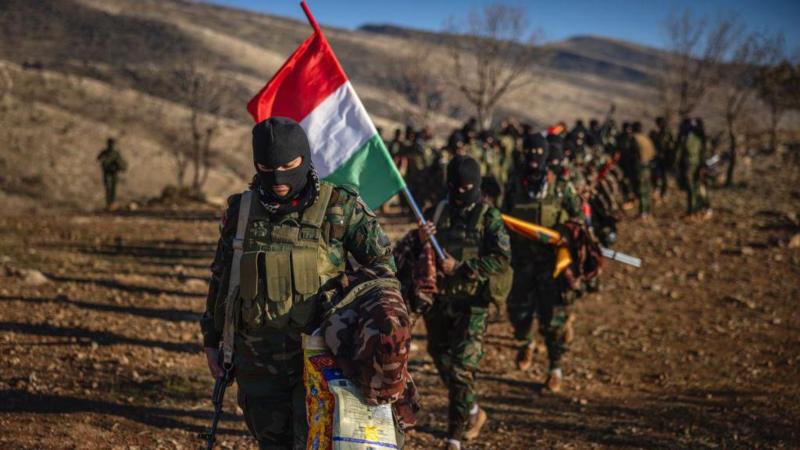
The challenges facing Iranian Kurdish opposition parties based in the Kurdistan Region of Iraq have entered a new and complex phase in recent years. This trend took on more serious dimensions when Donald Trump, the former President of the United States, openly spoke about sending weapons for transit into Iran—statements that resonated widely in the region’s political climate and drew increased attention to the role and position of these parties in regional equations. Although some of these parties attempted to distance themselves from the political and psychological consequences by denying or offering alternative interpretations of these claims, the synchronization of these developments with the formation of a coalition of Kurdish parties centered around PJAK noticeably heightened Iran’s security sensitivities.
PJAK and its relationship with the PKK have always been the subject of various debates and analyses. Regardless of the accuracy or inaccuracy of these perspectives, the reality is that Iran evaluates these developments within the framework of its own security considerations; consequently, military, security, and diplomatic pressures against Iranian Kurdish parties based in the Kurdistan Region of Iraq have entered an unprecedented stage.
It appears that the path laid out before these parties today is somewhat reminiscent of the process that unfolded years ago for the Mojahedin-e Khalq Organization (MEK) in Iraq—a process that ultimately led to the gradual expulsion of that organization from Iraqi territory. If such an analysis holds true, the opposing Iranian Kurdish parties are currently facing one of the most difficult periods in their political history.
It can perhaps be argued that two major strategic errors in the history of these movements have played a more prominent role than any other factor in shaping the current situation: first, the cooperation of a segment of these parties with the government of Saddam Hussein during the Iran-Iraq War, and second, their proximity to or alignment with certain foreign actors, including the United States and Israel, during recent regional tensions. Regardless of the political motivations and calculations of these parties, such approaches have carried heavy costs for them in Iranian public opinion as well as in the country’s security calculations.
Two factors seem to have acted as accelerators for the current situation: first, the formation of a coalition of Kurdish parties with a prominent role played by PJAK simultaneously with rising military tensions between Iran on one side and the US and Israel on the other; and second, the raising of claims regarding the shipment of weapons to these groups, which was also reflected in Trump’s remarks. The combination of these factors has caused the political and organizational future of these parties to face more ambiguity and peril than ever before.
Based on information I have received from various sources in the Kurdistan Region of Iraq, the current conditions for these parties are described as extremely difficult. Reports indicate that a significant portion of their headquarters and bases have been evacuated, and some have come under attack. The scattering of members across different areas, living in temporary and arduous conditions, and livelihood hardships resulting from this situation have raised significant humanitarian concerns, particularly for women and children.
In a conversation I had with an official from the Kurdistan Region of Iraq, he stated that the leadership of the Iranian Kurdish parties has been advised to consider the option of voluntary departure from the territory of the Kurdistan Region in order to find a sustainable solution. According to him, the possibility of accepting a number of well-known figures from these parties has been raised in discussions with certain countries. Furthermore, regarding lower-ranking members, the idea of voluntary return and settling their legal status through agreed-upon mechanisms has been discussed. He claimed that during contacts made with the Iranian side, requests for a more flexible approach toward these individuals have been put forward. Nonetheless, independent verification of these claims remains essential.
What appears certain is that the Kurdistan Region of Iraq has little desire to prolong the status quo and seeks a mechanism to bring an end to this lengthy and costly dossier. On the other hand, Iran has long emphasized the necessity of ending the military activities of these groups. In such circumstances, an unprecedented opportunity has emerged to move toward a political and peaceful solution.
From this perspective, the proposal for mediation by the Kurdistan Region of Iraq to end decades of tension and armed conflict could be taken into consideration. Various experiences around the world have demonstrated that even the longest conflicts ultimately yield results when the political will for dialogue and compromise is formed.
A notable example in this field is the recent trend toward voluntary disarmament and ending the armed struggle by the Kurdistan Workers’ Party (PKK) which, after years of bloody conflict with the Turkish government, presented both sides with a new path for a political resolution to the Kurdish issue. Although this process still faces challenges and ambiguities, the core principle of moving from armed conflict toward dialogue is considered an important experience for the region.
Similar examples have existed elsewhere in the world. The Irish Republican Army (IRA) in Northern Ireland, after decades of violence, accepted the path of disarmament and political participation within the framework of the Good Friday Agreement. Similarly, the FARC organization in Colombia, after more than half a century of civil war, entered the process of disarmament and legal political activity by signing a peace agreement. These experiences demonstrate that transitioning from armed struggle to political competition, though difficult and time-consuming, can be a less costly and more humane way to pursue political and social demands.
Ultimately, regardless of the differing viewpoints on the objectives, performance, and past of the Iranian Kurdish parties, preserving human lives, preventing the expansion of violence, and creating opportunities for dialogue must be prioritized. If an opportunity for mediation and the peaceful settlement of this conflict is available today, utilizing it can benefit all sides, particularly the people of the Kurdish regions—the very people who have paid the price of years of tension, conflict, and instability more than anyone else.