
A few weeks after the end of the forty-day war between Iran, the United States, and Israel, the debate regarding the attacks carried out against certain Iranian academic and research centers continues. In the memory of contemporary warfare, universities have repeatedly become part of the battlefield; from the bombing of Belgrade University during the Yugoslav War to the extensive damage inflicted upon scientific centers in Gaza. Yet, each time, a consistent question arises: when academic institutions are targeted, where is the line between military necessity and the violation of international humanitarian law principles?
In the literature of international law, a university is not merely an educational building. These centers are considered part of the civilian infrastructure of any society; a space for the transmission of knowledge, the training of human capital, and the preservation of a country’s capacity for post-war reconstruction. For this reason, the principle of distinction in international humanitarian law obligates warring parties to distinguish between military objectives and civilian objects.
Schools, universities, medical centers, and libraries, as long as they are not directly utilized in military operations, fall under the category of civilian objects.
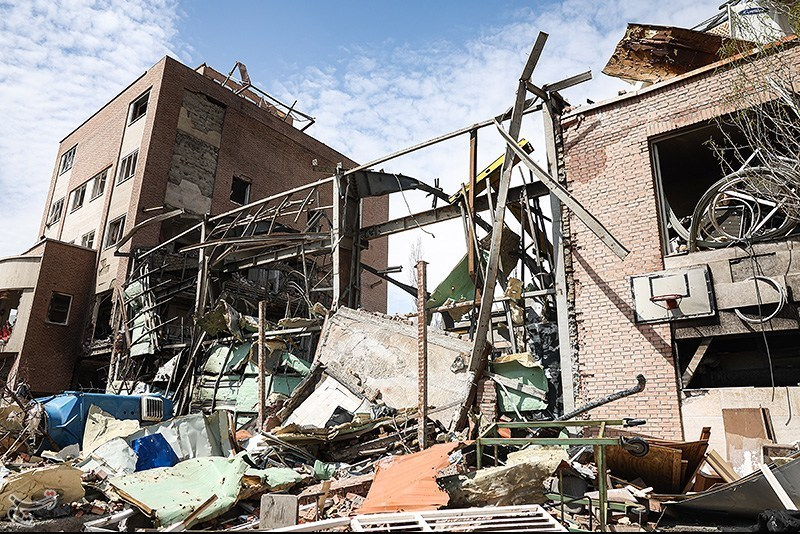
During the recent war, reports and published images showing damage to certain Iranian university and research centers, including sections of Shahid Beheshti University, Isfahan University of Technology, and some research facilities related to pharmaceuticals and technology, generated widespread discussion in media and legal circles.
Iranian officials deemed these attacks a clear violation of international law, whereas Israeli and American officials occasionally claimed that some of the targeted infrastructures were of dual-use nature or linked to strategic programs. In the absence of independent international investigations, the comprehensive verification of these claims remains difficult.
Subtly, even in cases where a warring party alleges the existence of a military or dual-use function, international law still mandates compliance with the principles of proportionality and precaution.
According to these principles, any attack must be designed in such a manner that harm to civilians and civilian infrastructure is minimized, and potential collateral damage must not be disproportionate to the anticipated direct military advantage.
Weeks after the end of the conflict, one of the primary focal points of criticism was the limited reaction of international organizations.
In a statement released on March 30, 2026, UNESCO expressed “profound concern” regarding the threats to higher education centers in the Middle East, emphasizing that universities must remain “spaces for knowledge and international cooperation.” The body also called upon all parties to respect their obligations under international humanitarian law and UN Security Council Resolution 2601 on the protection of education during conflict. (UNESCO)
Despite these stances, critics argue that the response of international institutions has largely remained confined to warnings and statements. This criticism is not limited to the recent war. In past years, during attacks on universities in Gaza, the destruction of educational centers in Africa, or damage to scientific infrastructure in Russia and Ukraine, international bodies repeatedly issued warnings, yet no effective mechanism was formed to prevent the recurrence of such attacks.
In this context, the debate over “dual-use objectives” has become one of the most complex issues in the laws of war.
Many of modern scientific infrastructure, particularly in the fields of technology, energy, or advanced research, may simultaneously possess civilian and strategic applications. However, this very complexity places a heavier responsibility on warring parties to provide precise evidence and adhere to the principle of proportionality. Humanitarian law does not permit an attack on a scientific center based solely on generalized claims or security assumptions.
The experience of recent wars demonstrates that damage to universities is not merely physical destruction. The annihilation of laboratories, scientific archives, libraries, and research networks can weaken a country’s scientific capacity for years. Rebuilding a structure may be achievable within a few years, but restoring human capital, research networks, and scientific confidence often requires significantly more time.
Ultimately, what is being raised today regarding the attacks on Iranian academic centers is not merely a political or media dispute; it is part of a larger question concerning the future of humanitarian law in modern warfare. If the international community fails to arrive at clear operational standards for the effective protection of educational and scientific infrastructure, the danger of normalizing attacks on knowledge-based institutions will increase more than ever before—a trend whose consequences will not be limited to a single country or a single war.
Sources and Citations
-
UNESCO Statement on Concerns Regarding Threats to Higher Education Centers in the Middle East (March 30, 2026)
-
International Committee of the Red Cross (ICRC); Principles of Distinction and Protection of Civilians in War
-
Definition of “Civilian Objects” in Humanitarian Law; Legal Database of the International Committee of the Red Cross
-
International Committee of the Red Cross in Iran; Fundamental Principles of Humanitarian Law
-
UNESCO Statement on the Increase of Attacks on Educational Centers in War Zones • “Education Under Attack” Report on Attacks on Schools and Universities in Armed Conflicts
The case exposes a larger cycle: one where social vulnerabilities are converted into raw material for extremist structures, and human beings disappear along the border separating “membership” from “captivity.”
Setareh’s return to civilian life does not conclude this story, as her brother and many others remain in a state of indefinite limbo. The fundamental objective for human rights organizations and international lawyers is not merely to take political stances against groups, but to defend principles that must never fall victim to expediency: the right to leave, the right to maintain family contact, the prohibition of exploiting vulnerable persons, and the ban on the forced or deceptive deployment of human beings in military structures.
If the international community remains silent in the face of such cases, the primary question will not be what happened to “Setareh,” but rather how many other “Stars” must disappear before this cycle is recognized as a severe human rights crisis?
Sources and References
-
Human Rights Watch — Reports and documentation regarding human rights and the status of non-state armed groups in the Middle East.
-
Human Rights Watch — Reports and documentation regarding human rights and the status of non-state armed groups in the Middle East.
-
Amnesty International — Documents and reports related to human rights violations, unlawful detentions, and individual rights in armed conflicts.
-
United Nations — Documents concerning international humanitarian law, protection of civilians, and the prevention of the use of child soldiers.
-
United Nations — Documents concerning international humanitarian law, protection of civilians, and the prevention of the use of child soldiers.
-
Geneva Call — Documents related to the commitments of non-state armed groups regarding the prohibition of using children in hostilities.
-
International Covenant on Civil and Political Rights (ICCPR).
-
International Covenant on Civil and Political Rights (ICCPR).
-
Convention on the Rights of the Child and its Optional Protocol on the involvement of children in armed conflict.
-
Fundamental principles of international humanitarian law concerning individual liberty, the prohibition of forced labor, and the right to family communication.