

Dr Ali Farahmand – Iranian Kurdistan Human Rights Watch
The publication of a letter signed by more than 510 academic, university and cultural figures from western Iran, addressed to the President and concerning the government’s ethnic policies, has once again placed a fundamental question before the academic community and decision-making institutions: Are the cultural and linguistic rights of Iran’s ethnic communities a threat to national cohesion, or should the real concern be the persistence of an approach that places citizens’ lawful demands alongside the activities of extremist and separatist movements?
According to Ensaf News, the letter was written in the spring of 2025 and published on 30 October 2026, coinciding with discussions about establishing a Kurdish language degree programme at Ilam University. The authors warn of the consequences of hasty policymaking on ethnic issues. While emphasising the protection of Iran’s national identity and territorial integrity, they express concern about the politicisation of local languages and the role of certain ethnonationalist movements.
Concerns about national security, territorial unity and preventing separatist movements from exploiting ethnic issues are legitimate subjects for examination and discussion. However, the problem begins when no clear distinction is drawn between the destructive activities of armed groups and the right of millions of Iranian citizens to enjoy their cultural and linguistic rights. This ambiguity can reproduce an approach that has long turned many of the issues affecting Kurdish regions into security matters, limiting opportunities to address the genuine problems faced by their residents.
The first point that must not be overlooked when examining this statement is the constitutional status of ethnic rights under the Constitution of the Islamic Republic of Iran. Article 15, while recognising Persian as the country’s official and common language, permits the use of local and ethnic languages in the media and the teaching of their literature in schools alongside Persian. Article 19 also stipulates that all people of Iran enjoy equal rights, regardless of their ethnic or linguistic affiliations.
Therefore, establishing a university programme in Kurdish language and literature, provided it is based on academic standards, educational needs and the region’s cultural capacities, should not inherently be treated as a security issue. Just as establishing degree programmes in Persian, Arabic, Turkish or other languages does not amount to launching a political project, university-level education in Kurdish does not, in itself, indicate the existence of separatist objectives.
Indeed, if the government can address a cultural issue through academic and educational means, this should be regarded as a sign of respect for citizens’ rights and a move away from exclusively security-based interpretations. Universities are places for producing knowledge, understanding cultural heritage and engaging in academic dialogue—not institutions in which every activity related to an ethnic community’s language must inevitably be interpreted through the lens of political conflict.
Some of the concerns raised by the letter’s authors about the linguistic diversity of western Iran are, of course, worthy of consideration. The languages and linguistic varieties spoken in Ilam, Kermanshah and Kurdistan are not identical, and university policymaking must take this diversity into account. However, this academic reality does not justify concluding that Sorani education should be halted or opposed. If the concern is that Kalhuri, Laki, Hawrami, Gorani and other linguistic varieties are being overlooked, the logical response is to expand research, documentation and teaching in those varieties—not to restrict existing educational opportunities for one of these languages.
The question is why, instead of calling for the establishment of specialised departments to study other languages and dialects of the region, the creation of a single university programme becomes a subject of warnings about national security. Is Iran’s linguistic heritage better protected through the development of academic institutions, or by increasing security-related sensitivities towards its teaching?
An even more important issue is the need to distinguish Kurdish society in Iran from armed and separatist movements—a distinction that is not given sufficient attention in many political debates concerning Kurdish regions.
The Kurdish people are an inseparable part of Iranian society. Kurdish identity and belonging to Iran are not two conflicting identities; they are two dimensions of the cultural and social lives of millions of citizens of this country. Nevertheless, in some analyses, the activities of armed groups based outside Iran’s borders become so intertwined with ethnic issues that these groups appear to be the natural representatives of Kurdish society, or the cultural and linguistic demands of citizens are assessed in light of those groups’ positions.
This understanding requires serious reconsideration. No armed group acquires the right to represent an entire community politically or socially simply by using the name of an ethnic group. Any claim to representation must be assessed against criteria such as the freely given consent of the people, accountability, respect for human rights and social legitimacy.
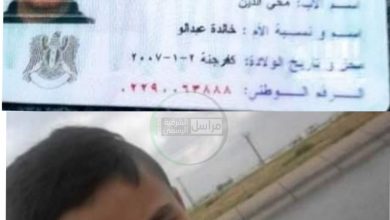
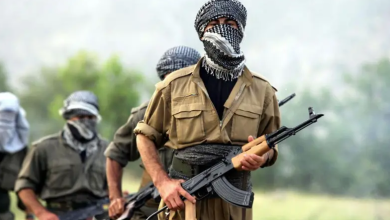
The documentation work of Iranian Kurdistan Human Rights Watch also highlights the importance of making this distinction. Cases collected by the organisation include accounts of the recruitment of adolescents, deception during recruitment processes, exploitation of family and social vulnerabilities, and restrictions imposed on individuals seeking to leave armed groups.
These accounts—including cases involving the recruitment of minors, difficulties in leaving organisational structures, and families’ efforts to bring their children home—raise a serious question: How can a group that claims to defend the rights of a community remain unaccountable for respecting its members’ right to free choice, their right to maintain contact with their families, and the prohibition on child recruitment?
Of course, the existence of such cases alone is not sufficient to assess the level of social support enjoyed by all armed groups. However, they provide important evidence with which to challenge these groups’ claims to exclusive representation of the Kurdish people. In particular, the recruitment of vulnerable individuals and allegations that members are prevented from leaving freely reinforce the need for independent scrutiny of these organisations’ conduct.
From this perspective, one of the greatest injustices to Kurdish society is to judge its lawful cultural demands and rights by the conduct of organisations that themselves face serious allegations of violating the rights of Kurdish citizens.
It must not be forgotten that, in such circumstances, a threat-based approach can produce the opposite of its intended effect: the more suspicion directed towards citizens’ lawful demands, the harder it becomes to distinguish civic demands from the activities of violent groups. Conversely, expanding lawful opportunities for cultural, political and social participation can create conditions in which people’s demands are heard independently of armed groups.
Sustainable security in Kurdish regions cannot be achieved solely by restricting armed threats. It requires public trust, social participation, economic opportunities and citizens’ confidence that they enjoy equal legal rights to the same extent.
Alongside this debate, however, there is a more tangible issue that more than 510 academic and cultural figures from western Iran should also be expected to address: the situation of families whose children are trapped in the bases of armed groups operating in the Kurdistan Region of Iraq.
Over the past several years, Iranian Kurdistan Human Rights Watch has encountered families who have sought assistance in bringing their children back from these groups’ bases. These include one family from Ilam and several families from Javanrud who say their children were drawn into armed groups under circumstances that did not reflect their genuine will and consent, and that the families have faced serious obstacles in securing their return.
These families are not making complicated or political demands. They want to know what has happened to their children, establish contact with them and, if their children wish to return, ensure that safe and voluntary departure from these organisations is made possible. Is this demand any less important than concern about the establishment of a university degree programme?
Based on its follow-up efforts, Iranian Kurdistan Human Rights Watch has repeatedly asked Mr Faramarz Asadi, Consul General of the Islamic Republic of Iran in Erbil, to use the available diplomatic channels and existing engagement with officials in the Kurdistan Region of Iraq to address these families’ circumstances. However, these requests have so far produced no tangible results for the families concerned, nor has an effective response been received.
This issue requires a clear response from the diplomatic service. Mr Asadi holds a position in which maintaining formal relations and ongoing communication with officials in the Kurdistan Region of Iraq forms part of his professional responsibilities. Reports of his meetings with regional officials, including executive authorities in Erbil, also demonstrate that such channels of communication are available.
The expectation of the Ministry of Foreign Affairs is not simply that it should remain attentive to political developments in the Kurdistan Region. Rather, consular protection for Iranian citizens, particularly children and vulnerable individuals caught in dangerous circumstances, must become an operational priority. Following up on these individuals’ situations, requesting independent access to them, facilitating contact with their families, and enabling safe and voluntary return are specific demands that can be pursued.
The government must also use all legitimate diplomatic, legal and cross-border cooperation mechanisms to prevent forced recruitment networks, particularly those recruiting children. Addressing threats originating from activities outside Iran’s borders must not be replaced by heightened sensitivity towards lawful cultural activities inside the country.
If certain armed groups use the territory of the Kurdistan Region to recruit Iranian citizens, detain individuals who wish to leave, or organise violent activities, addressing these issues requires effective cooperation with the Iraqi government and the Kurdistan Regional Government, implementation of human rights obligations and judicial follow-up of documented cases. Such an approach would protect the rights of Iranian citizens while ensuring that responsibility for human rights violations is directed towards those actually responsible.
For this reason, it is reasonable to ask the signatories of the letter why their considerable academic and social influence has not been used to make a collective demand for action on behalf of these families. What prevents these professors, researchers and cultural figures from writing a letter to the President and the Minister of Foreign Affairs, calling for urgent action to establish the fate of Iranian children and young people trapped in the bases of armed groups?
Defending Iran’s territorial integrity without defending the security and dignity of the citizens living in its border regions would be an incomplete undertaking. The country’s borders are not merely geographical lines. Within them live people who have the right to security, education, development and legal protection. The government cannot remain alert to cross-border threats while lacking effective accountability mechanisms when a family asks for help in bringing its child home.
Alongside this issue, another challenge has received less attention in the published letter: the uneven development of Kurdish regions and the extensive economic opportunities that have yet to be translated into tangible potential.
The provinces of Kurdistan, Kermanshah and Ilam, as well as Kurdish-inhabited areas of West Azerbaijan, possess not only valuable linguistic and cultural heritage but also exceptional potential for natural, historical, cultural, religious and rural tourism. Hawraman, Kermanshah’s historical sites, the Zagros landscape, Ilam’s cultural heritage and the extensive network of villages and border attractions represent only some of the opportunities that could create sustainable employment and increase local communities’ incomes.
To understand the significance of this potential, it is enough to consider Turkey’s experience. According to official data, Turkey generated more than $65 billion in tourism revenue in 2025.
Clearly, directly comparing the potential tourism capacity of several Iranian provinces with Turkey’s total tourism revenue, without an economic study and precise estimates, would not provide a sufficient scientific basis. Nevertheless, this scale of revenue demonstrates how significantly tourism can contribute to a regional economy when supported by appropriate infrastructure, investment and professional management.
The central question is why Kurdish regions of Iran, despite possessing such extensive historical, natural and cultural resources, still lack a position in the country’s tourism economy commensurate with their potential. Why should the development of roads, accommodation facilities and transport infrastructure, the protection of cultural heritage, private-sector investment and the creation of sustainable employment not become subjects of national and academic advocacy?
Is a young person deprived of adequate educational and employment opportunities in a border region not more concerned about their economic and social future than about the establishment of a Kurdish language programme at Ilam University? Does a family whose child is forced to undertake hazardous work along the border because of a lack of employment opportunities not expect university professors and government officials to show an equal sense of responsibility towards job creation and reducing social harm?
These questions do not mean that the importance of cultural policymaking should be overlooked. Rather, they point to the need for a comprehensive understanding of the national interest. It is impossible to speak of national security while pushing economic security, human security and equitable access to development opportunities to the margins.
Furthermore, if the letter’s authors seek to protect the historical cohesion of the Iranian people, they must recognise that this cohesion cannot be maintained merely through warnings about threats. National cohesion also depends on citizens’ lived experience of justice, equality and access to shared opportunities. People whose language, culture and identity are respected, whose problems are heard and who have a genuine share in the country’s development can participate in national life within a clear and lawful framework.
The government, meanwhile, must not be exempt from criticism. Defending the establishment of a Kurdish language programme or other cultural initiatives does not mean unconditionally endorsing the government’s ethnic policies. On the contrary, the government is obliged to explain the principles on which its cultural policies are designed, how it takes the linguistic diversity of different regions into account, and what plans it has developed for balanced development, reducing deprivation and protecting the rights of citizens in border areas.
However, criticism of government policies must be based on an assessment of their actual consequences, verifiable evidence and clear legal standards. Attributing hidden political objectives to an educational programme without providing specific evidence cannot replace expert scrutiny. Nor should concerns about extremist movements be allowed to lead to a security-based perception of the cultural rights of all citizens.
Another important issue deserving attention is the responsibility of the academic community to identify the genuine priorities of Kurdish regions. A statement signed by hundreds of academic and cultural figures may indicate a shared concern, but the number of signatures alone does not establish the validity of its analysis or the priority of the issue it addresses. The credibility of an academic demand depends above all on the strength of its arguments, its reliance on evidence and its relevance to the actual concerns of society.
If the establishment of a Kurdish language programme at Ilam University raises educational concerns, the discussion should address the curriculum, linguistic diversity, the capacity of academic staff, regional needs and students’ future academic prospects. If there are concerns about the political exploitation of language, specific examples, possible mechanisms and supporting evidence should be presented. But if the issue is reduced to a general concern about ethnic consequences, the boundary between academic criticism and a security-based interpretation becomes blurred.
Iranian Kurdish society must not be understood solely through the walls of armed groups’ bases. Understanding this society requires engaging with universities, schools, families, business owners, artists, local intellectuals and citizens who seek a secure life, enjoyment of their legal rights and participation in the development of their country. Reducing this diverse society to the conflicts involving armed groups neither provides an accurate picture of social reality nor helps resolve the problems of Kurdish regions.
Iranian Kurdistan Human Rights Watch believes that ethnic issues must be removed from the false dichotomy between cultural rights and national security. Protecting territorial integrity, combating organised violence and preventing armed groups from recruiting children are not inherently incompatible with supporting local-language education, preserving cultural heritage and achieving equitable development. On the contrary, these objectives can be pursued together through responsible policymaking grounded in citizens’ rights.
From this perspective, the government’s responsibilities are clear: it must recognise citizens’ cultural and linguistic rights within the framework of the Constitution, pursue development policies in border regions through measurable indicators, take effective legal and diplomatic action against child recruitment and violations of the rights of members of armed groups, and account for the outcomes of its efforts on behalf of affected families.
The academic community, too, should demonstrate concern not only for territorial integrity but also for the fate of children trapped in armed organisations, families waiting anxiously for their return, young people deprived of employment opportunities, and the untapped development potential of Kurdish regions.
Ultimately, the fundamental question is not whether teaching the Kurdish language poses a threat to Iran. The question is why, in some discussions of national security, the teaching of an Iranian language receives such prominence, while the suffering of families whose children are trapped in the bases of armed groups and the development opportunities that could transform the futures of thousands of young people receive far less attention as matters of public advocacy.
Iran’s territorial integrity cannot be defined separately from the rights, security and dignity of the people who regard this country as their home. Defending Iran also means defending the rights of Kurds and other ethnic communities in the country, just as defending Kurdish rights must not be left to groups whose own conduct requires human rights scrutiny and accountability.
If a statement bearing hundreds of signatures is to be written in defence of Iran, it should speak not only of protecting territorial borders and cultural heritage, but also of a young person’s right to return to their family, the right to education in their mother tongue within the framework of the law, the right to equitable development and the right to live in safety and dignity.
Iran is not merely a collection of geographical borders and historical heritage. Iran is also its people. Protecting this country without protecting the rights of its people will not achieve its purpose.