
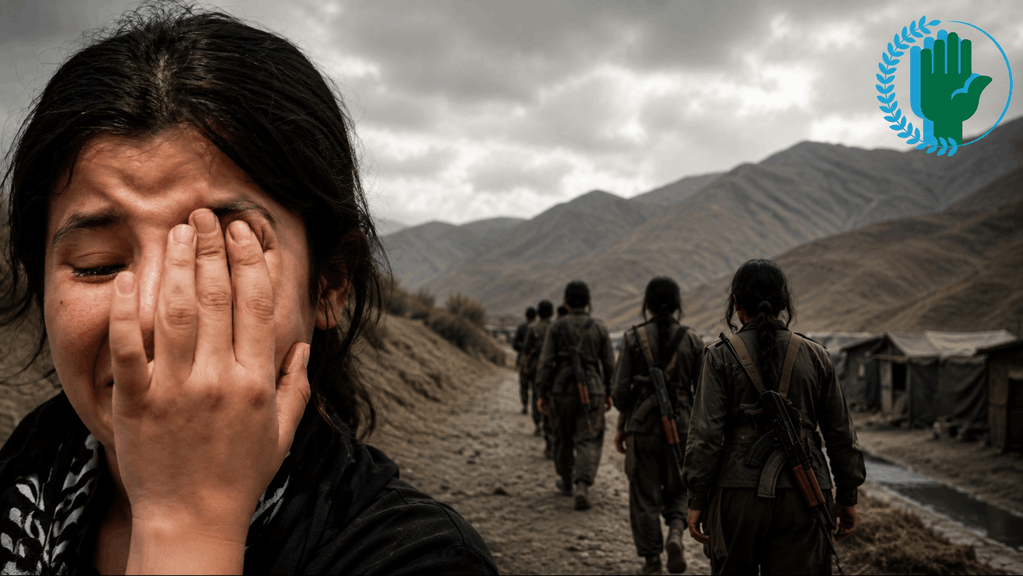
In the cold mountains of the Kurdistan Region of Iraq, behind armed facades and grand political slogans, lies a bitter truth; the truth of girls whose voices have gone unheard for years. These are girls who were neither born for war nor for enduring misery and isolation, yet they are currently trapped within the confines of a group that loudly proclaims freedom but, in practice, strips its members of their most fundamental human rights.
In a report by a Deutsche Welle (DW) journalist from the camp of the paramilitary group under the command of Hossein Yazdanpanah, what shook public opinion more than any image or weapon was the involuntary tears of a young girl who suddenly broke down during an interview. A single sentence from this girl was enough to expose the depth of the tragedy:
“For two years, I haven’t been able to contact my family.”
These few words offer a complete narrative of the silent captivity of human beings whose identities and lives have been sacrificed behind political and military titles. These are girls who have been torn from the embrace of their families, denied the basic right to communicate, and spend their days under intense psychological, emotional, and ideological duress.
For years, human rights organizations and independent media have spoken out against the violent behavior and inhumane restrictions imposed by this group; ranging from the prohibition of family contact to psychological pressure, threats, punishments, and shocking reports of torture, abuse, and even suspicious deaths. Yet, despite all these warnings, a heavy silence continues to cast a shadow over the fate of these women.
Even more bitter are the numerous reports indicating financial and military backing for this group from certain political factions within the Kurdistan Region of Iraq—a support system that has left the victims more defenseless than ever. It is reported that many young individuals, and even Kurdish laborers, are drawn into this armed structure under duress and coercion; a place where defection is incredibly difficult, and returning to a normal life becomes a distant dream.
The tears of that girl were not merely the tears of one individual; they represented the silent scream of hundreds of anonymous girls who may never find an opportunity to speak out. These are girls who are wasting away in silence, while the outside world either does not hear their voices or prefers to look the other way.
The documentary “Diji Kano” (Against the Law) attempted to narrate a fraction of this bitter reality; the story of women who have fallen victim to political games, organized violence, and a thirst for power. However, the ultimate question remains: why, when the victims are defenseless and isolated women, does the global conscience remain so profoundly silent?
Today, the issue is not merely about an armed group; it is about human beings who are slowly being forgotten in the shadows of silence—girls whose only remaining wish might be to hear their mother’s voice just one more time.